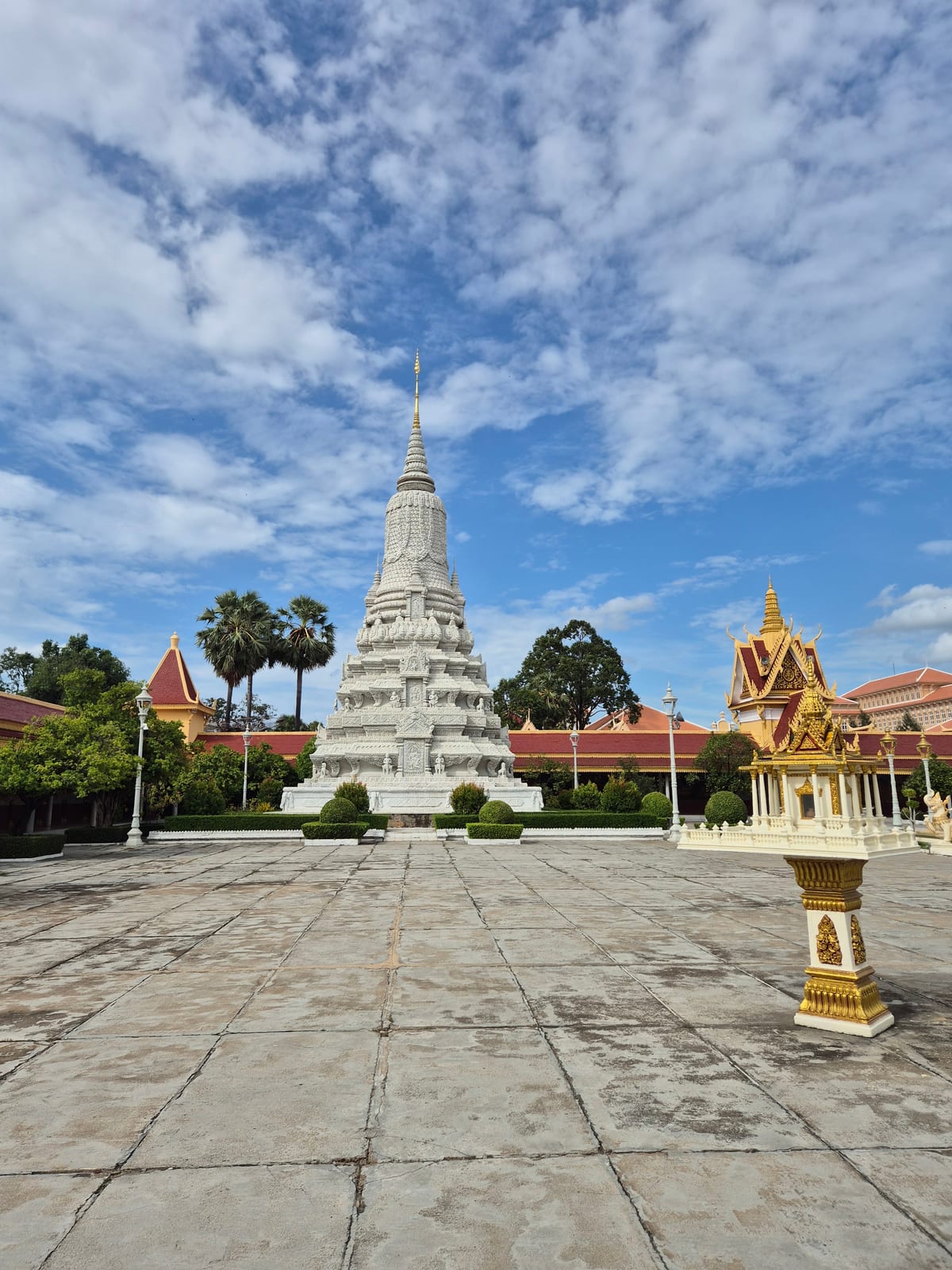
Royal Palace of Cambodia Phnom Penh · Cambodia
📢 Notice: The palace closes for lunch (11:00–14:00) and may close temporarily during royal ceremonies. Shoulders and knees must be covered.
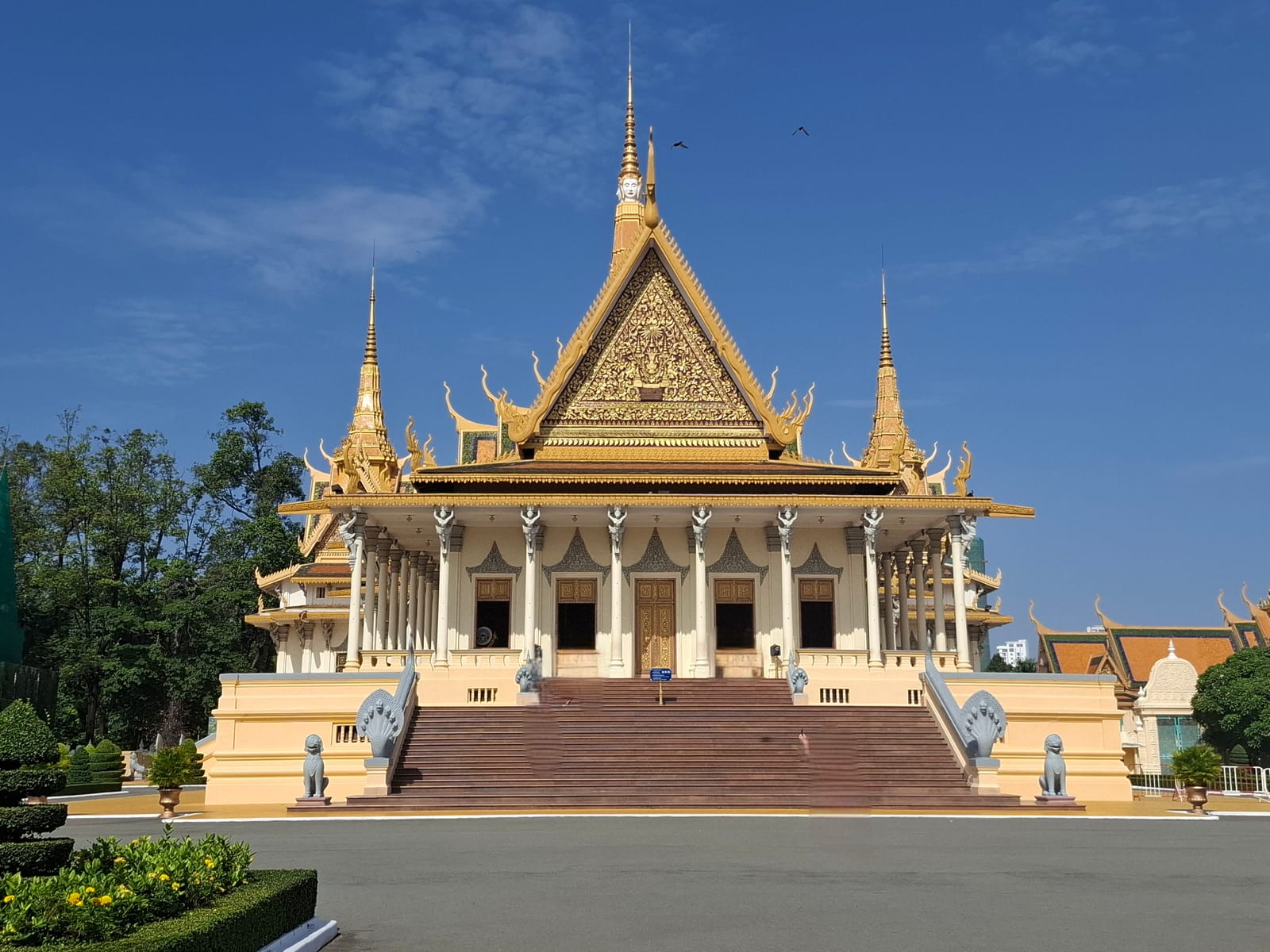
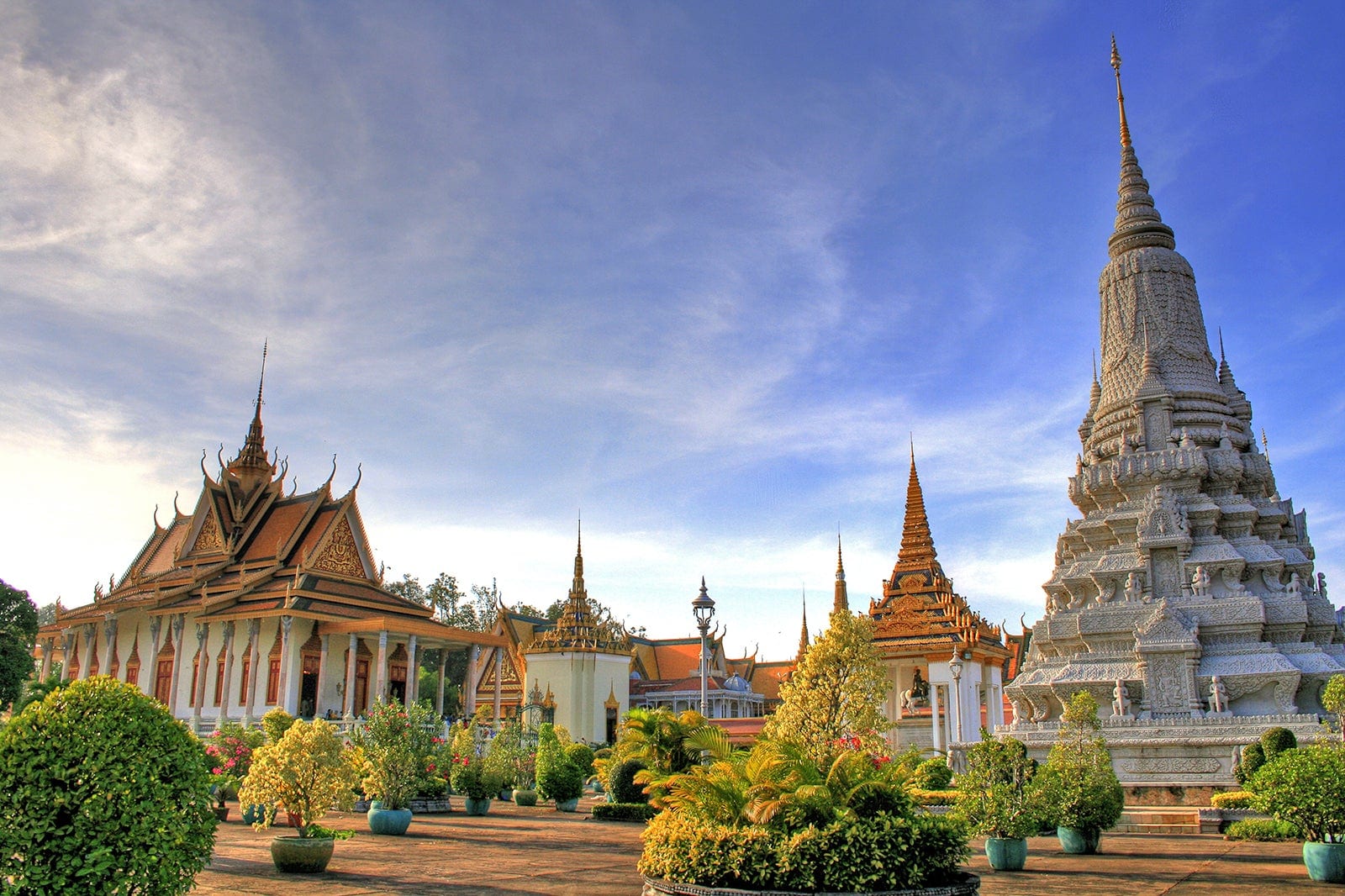
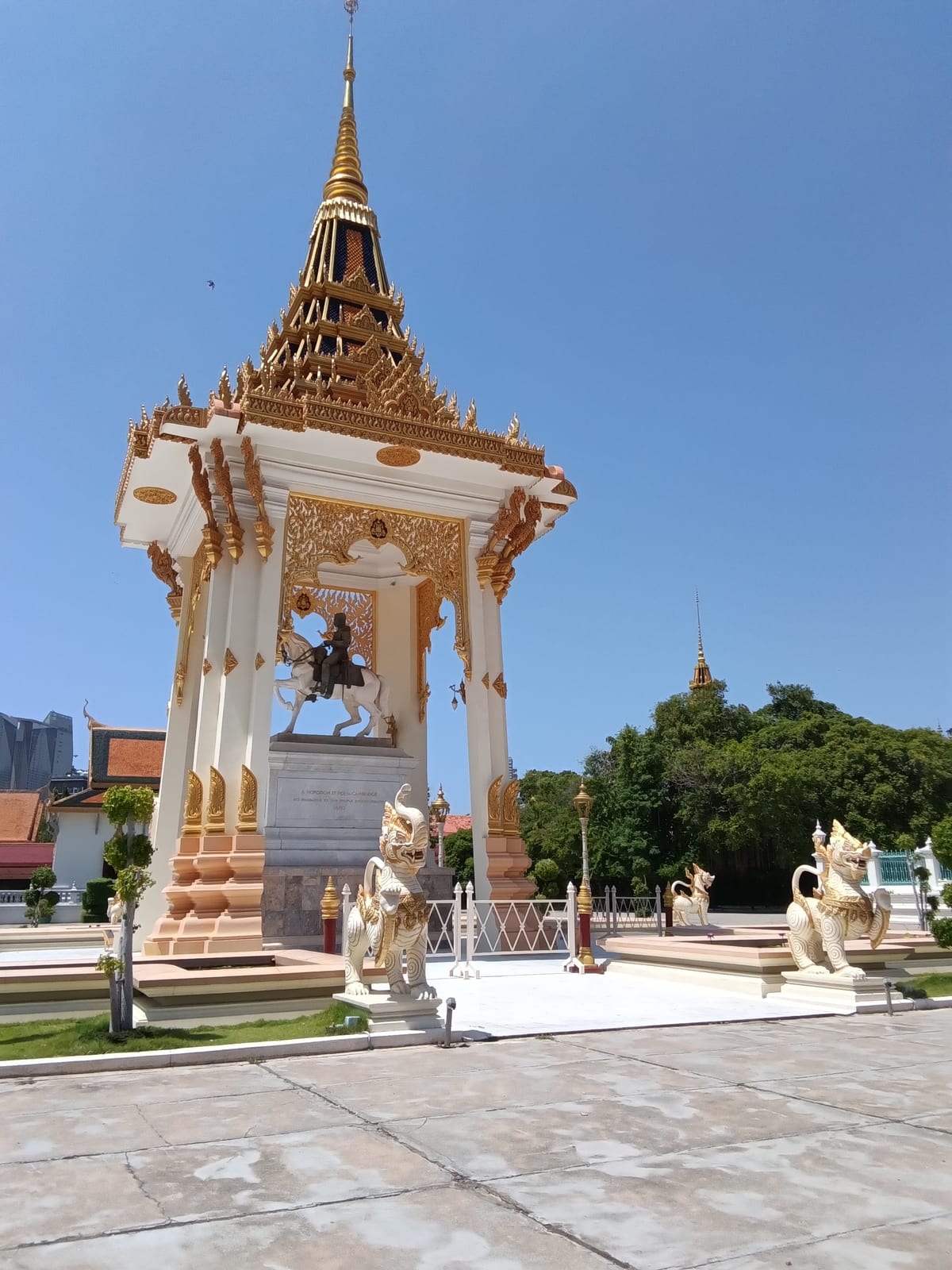
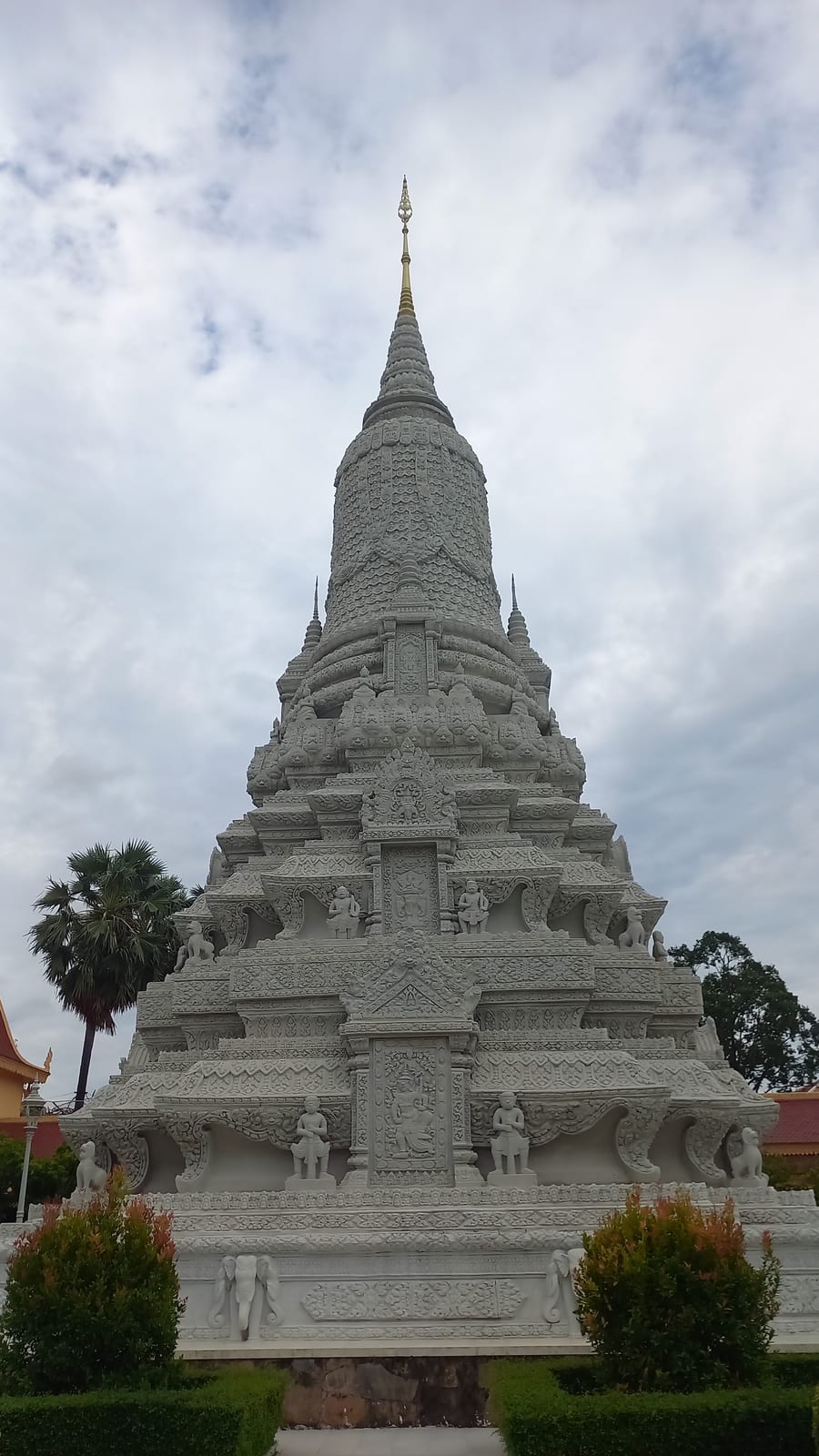
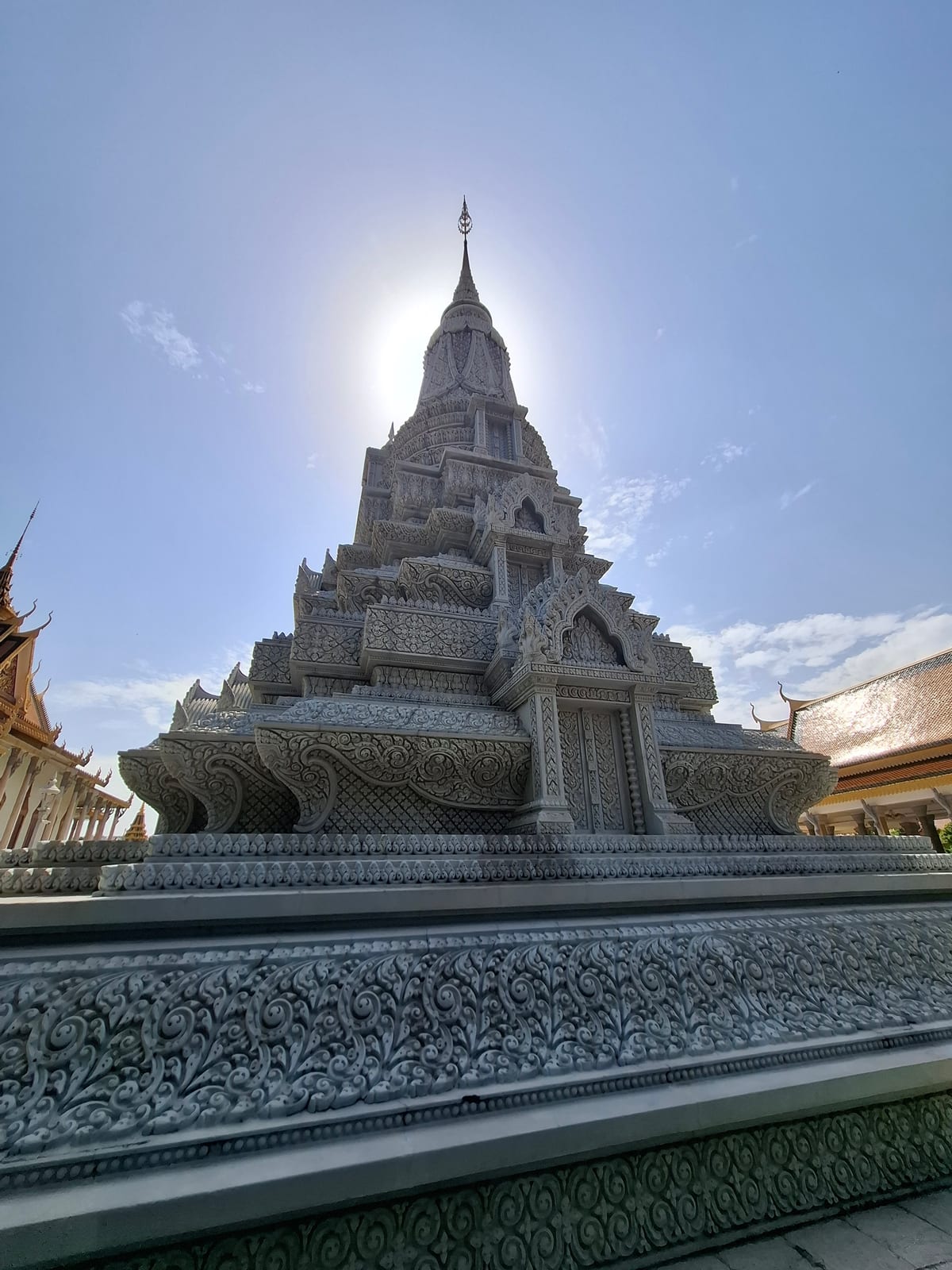
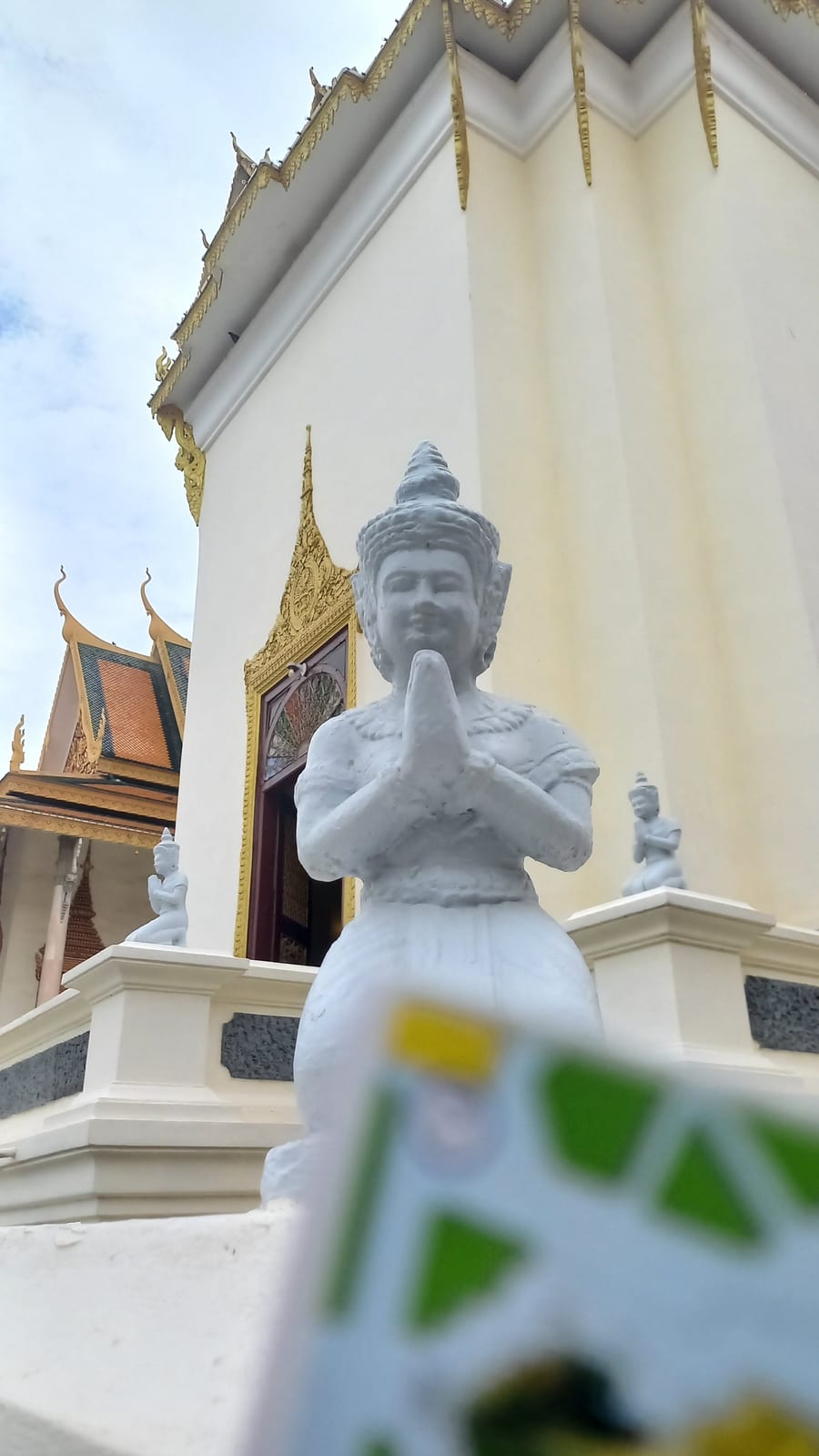
Royal Palace of Cambodia - Main view in Phnom Penh, Cambodia
⭐ 4.3 · 13,827 reviews

Rating and review count synced from Google Maps user reviews · October 2026 · View all reviews on Google Maps ↗

Royal Palace of Cambodia (Phnom Penh)

Independent, non-commercial guide — not affiliated with the palace administration

A living royal residence and Cambodia's most sacred cultural landmark, where Khmer tradition meets French colonial elegance on the banks of the Four Rivers.

Location Phnom Penh
Hours 08:00–11:00 · 14:00–17:00
Rating 4.3 / 5
Ticket $10 USD

At a glance

Location
Samdach Sothearos Blvd (3), Phnom Penh (plus code HW7J+HG)
Hours
08:00–11:00 & 14:00–17:00 (closed midday)
Ticket
$10 USD (cash on-site)
Dress code
Shoulders & knees covered
Built
1866
Rating
4.3 / 5 (13,827 Google Maps reviews)

Phnom Penh · Cambodia

About the Royal Palace of Cambodia

Welcome to the Royal Palace of Cambodia, widely recognized as the central Royal Palace Phnom Penh. Located in the heart of Phnom Penh, Cambodia, this destination serves as a primary hub for travelers visiting the region.

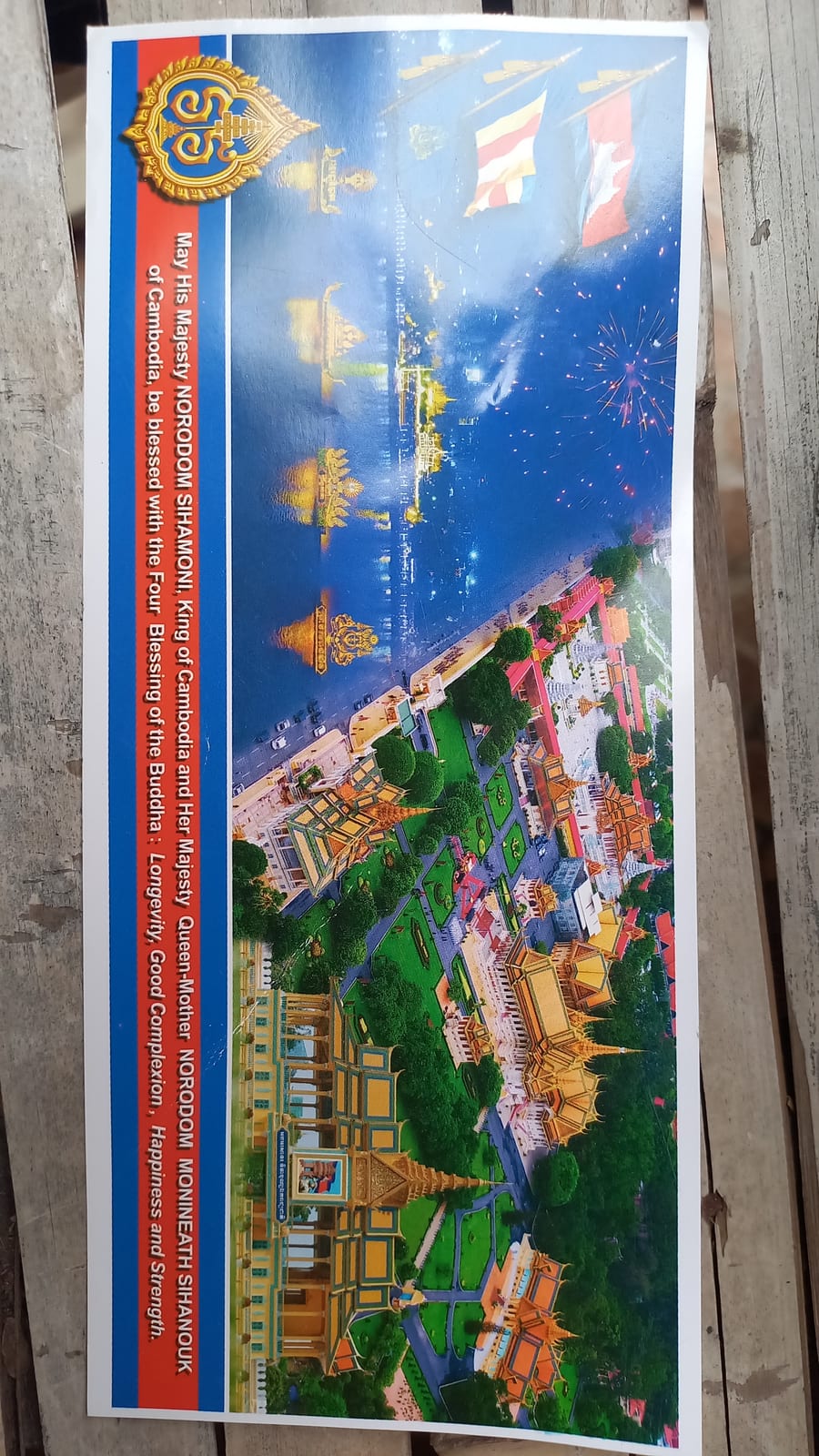
The Royal Palace of Phnom Penh was founded in 1866 by King Norodom I, who moved the capital back to Phnom Penh from Oudong. He chose this site at the confluence of the Four Rivers — the Tonlé Sap, the Upper Mekong, the Lower Mekong and the Bassac — a place Khmer geomancy regards as a protective, prosperity-bringing heart of the kingdom.

More than a museum, the palace remains the official residence of the Cambodian royal family and the stage for coronations, royal weddings and state ceremonies. Its layout blends traditional Khmer architecture with the French colonial influences introduced during the protectorate.

Did you know? When the golden royal flag flies above the palace's tallest spire, it means the reigning monarch — King Norodom Sihamoni — is inside.
Heritage

History & Significance of the Royal Palace of Cambodia

From a royal vision to a living heritage

  1. 1866

    Capital moved to Phnom Penh

    King Norodom I relocates the court from Oudong and begins building the palace complex.

  2. 1870s

    Throne Hall completed

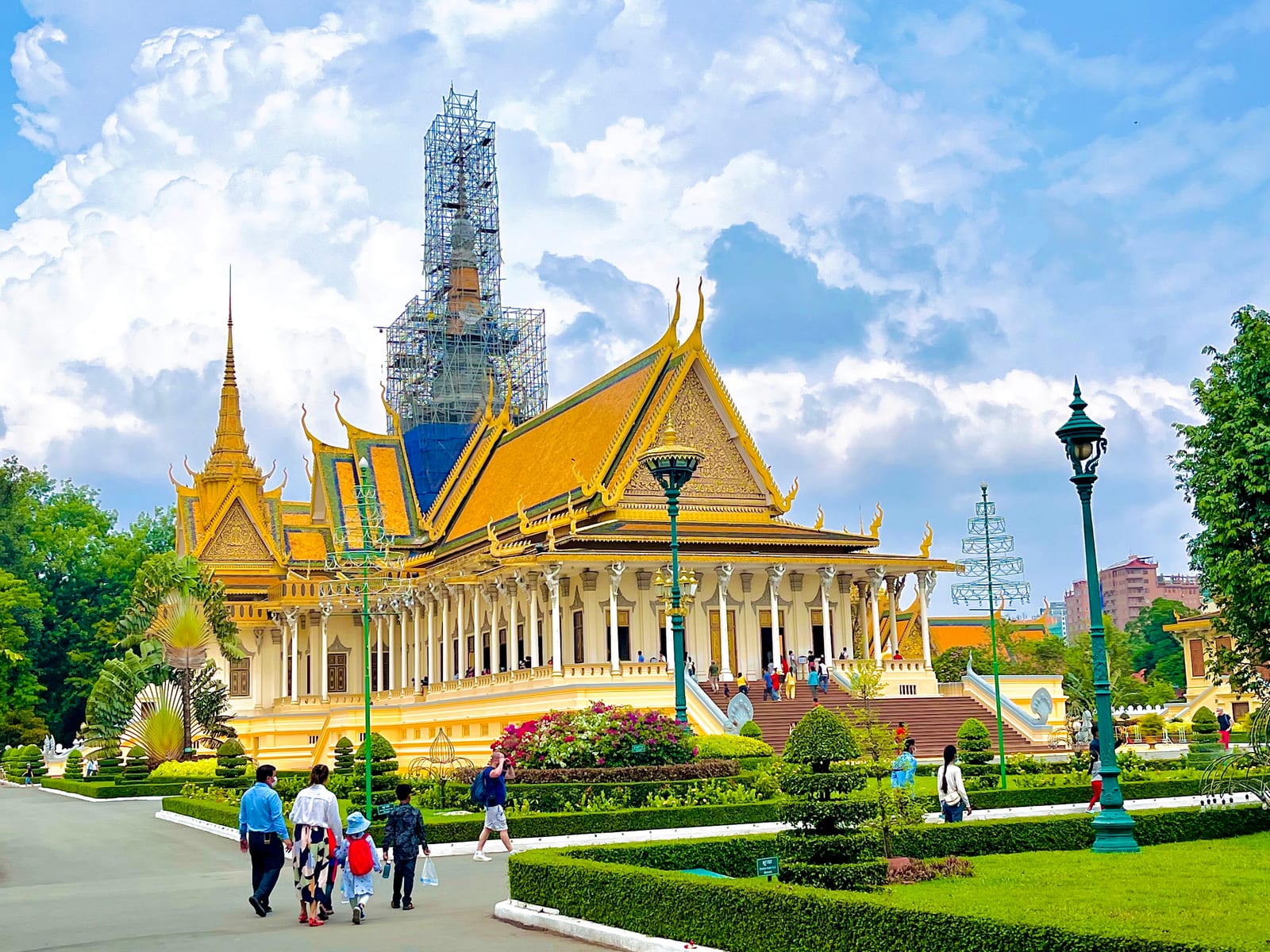
    The central ceremonial hall rises with its 59-metre gilded tower.

  3. 1892

    Silver Pagoda established

    A wooden sanctuary for royal relics is built; later reclad in solid silver.

  4. 1903–1904

    Reamker murals painted

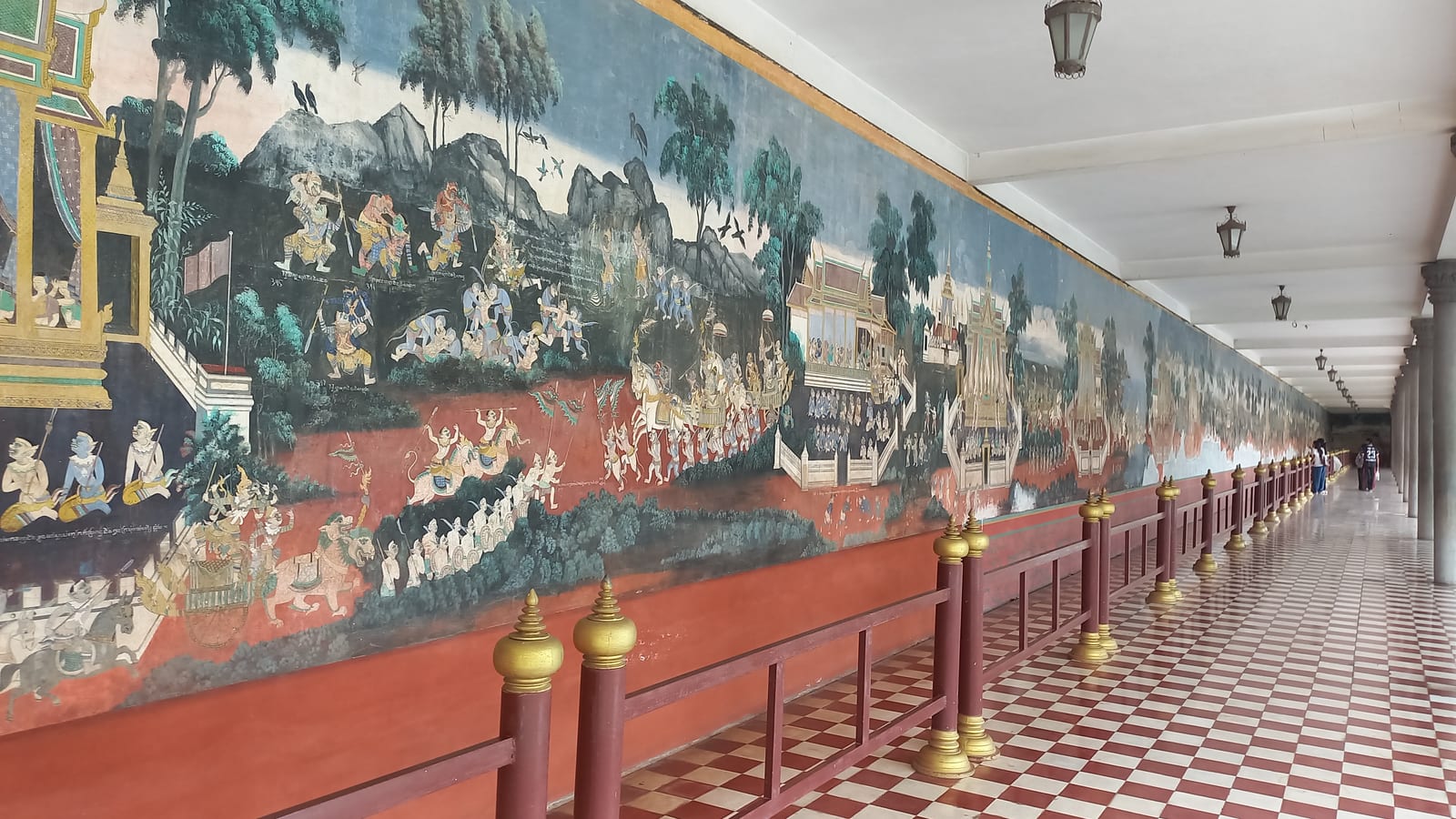
    Artists cover the cloister walls with 600 m of the Khmer Ramayana.

  5. 1993

    Restored as royal residence

    After turbulent decades, the monarchy is reinstated and the palace reopens to the public.

Design

Highlights & legends

Centuries of craftsmanship, faith and royal spectacle — here are the treasures you should not miss.

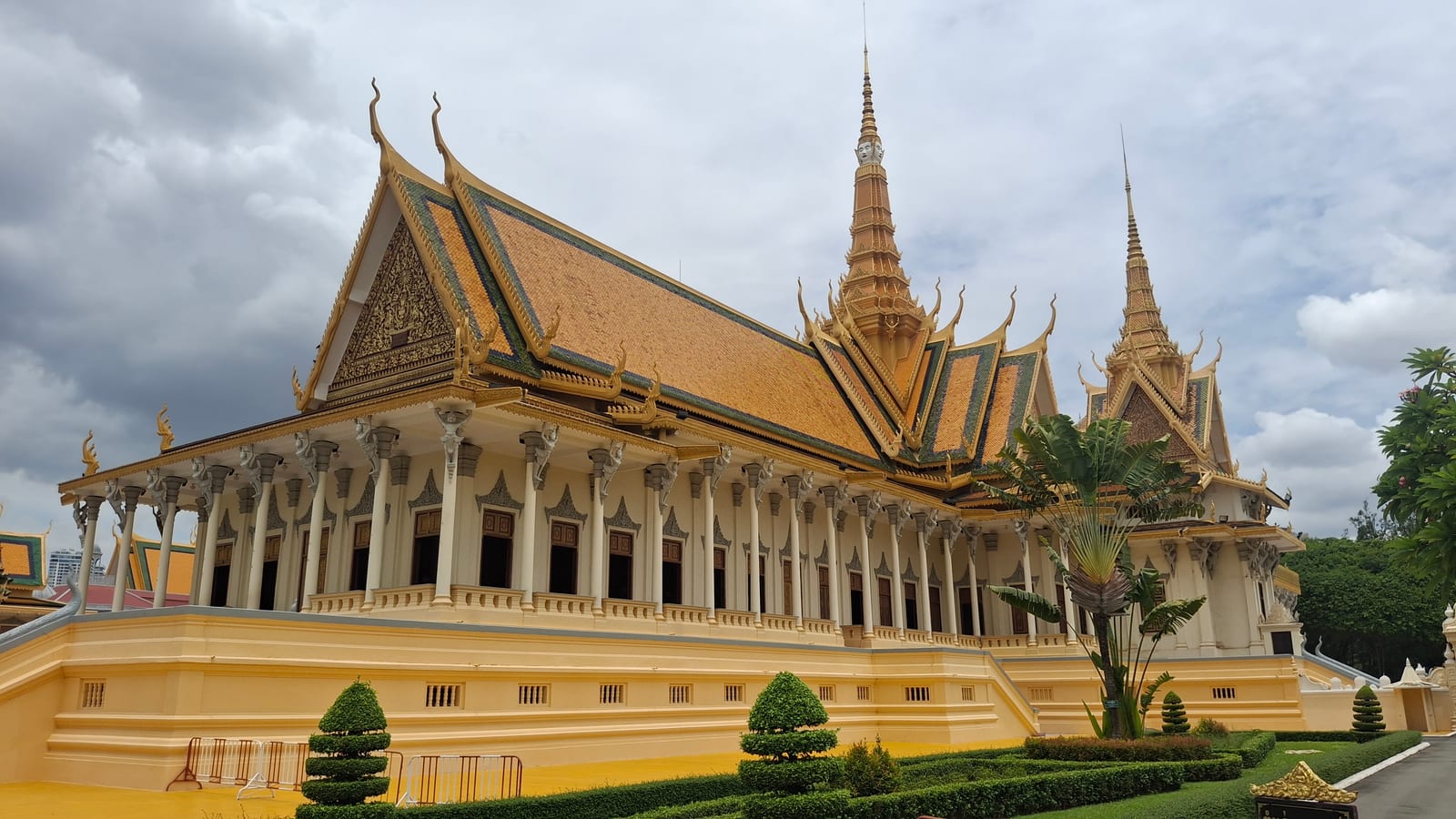
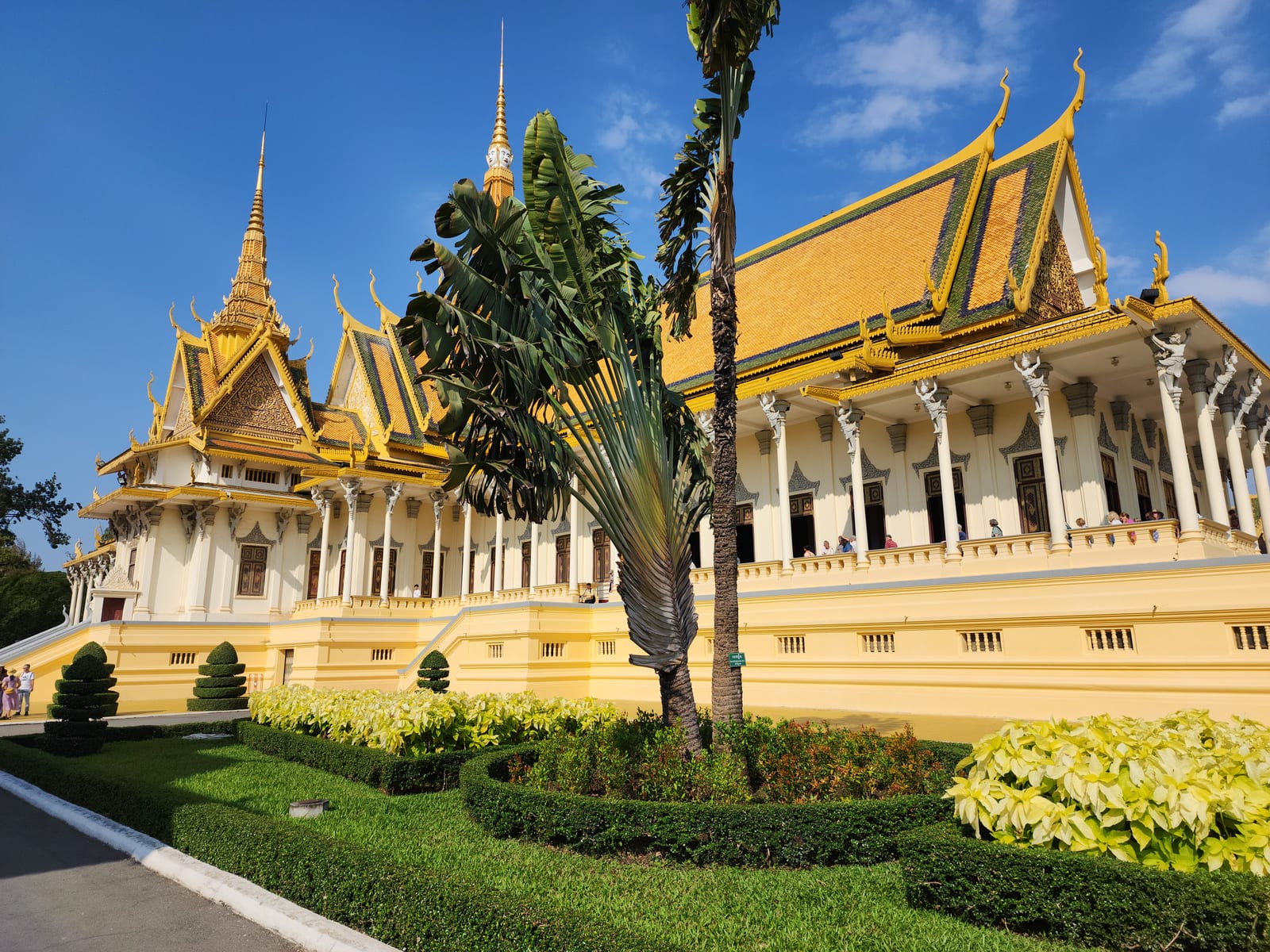
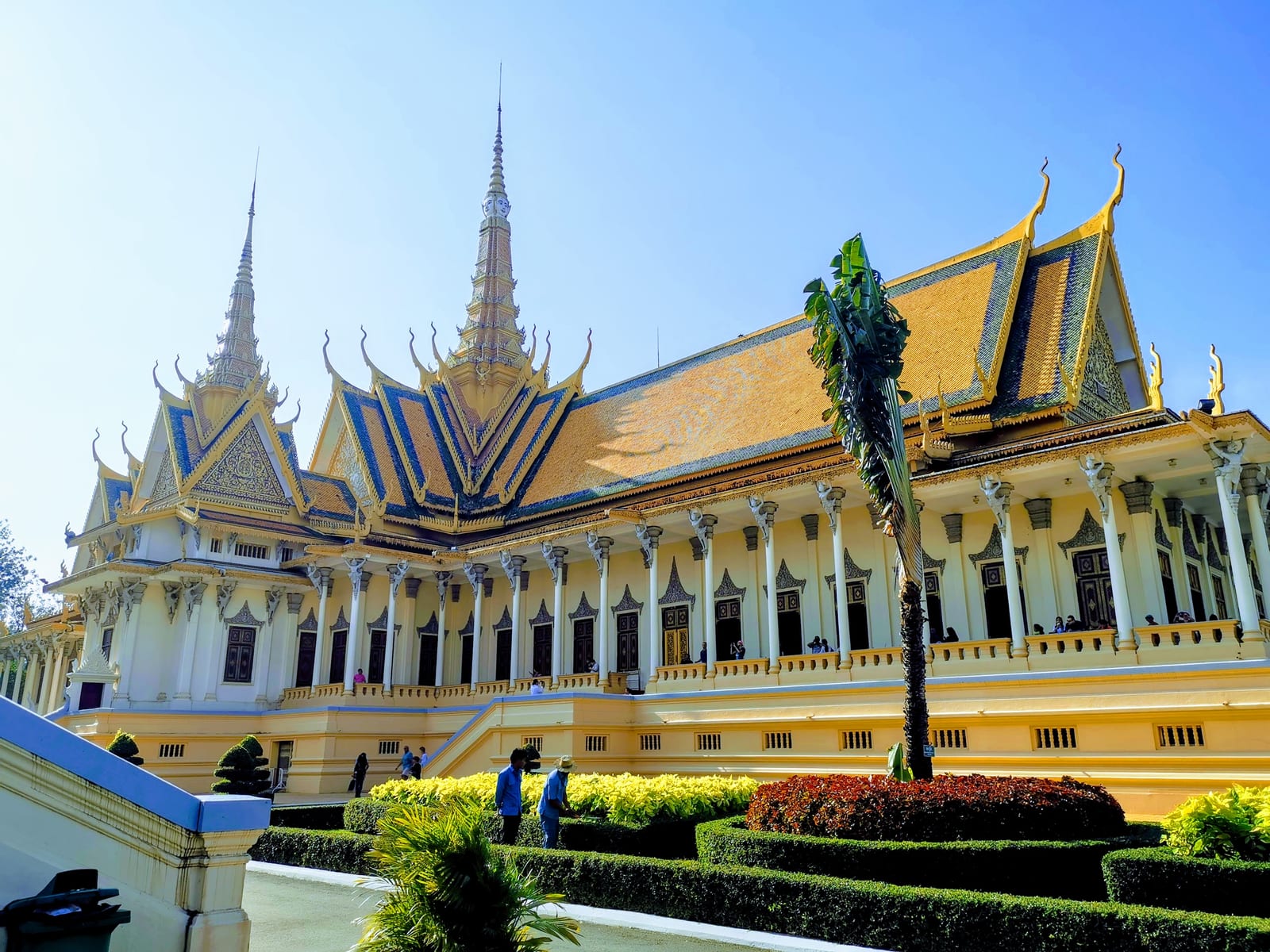
Throne Hall (Preah Tineang Tevea Vinichhay)

Throne Hall (Preah Tineang Tevea Vinichhay)

ព្រះទីនាំងទេវវិនិច្ឆ័យ

Topped by a 59-metre golden tower blending Khmer prasat form with Brahmin symbolism. Used for coronations, receptions of foreign heads of state and royal audiences. Photography inside is strictly forbidden.

✨ 59 m golden spire

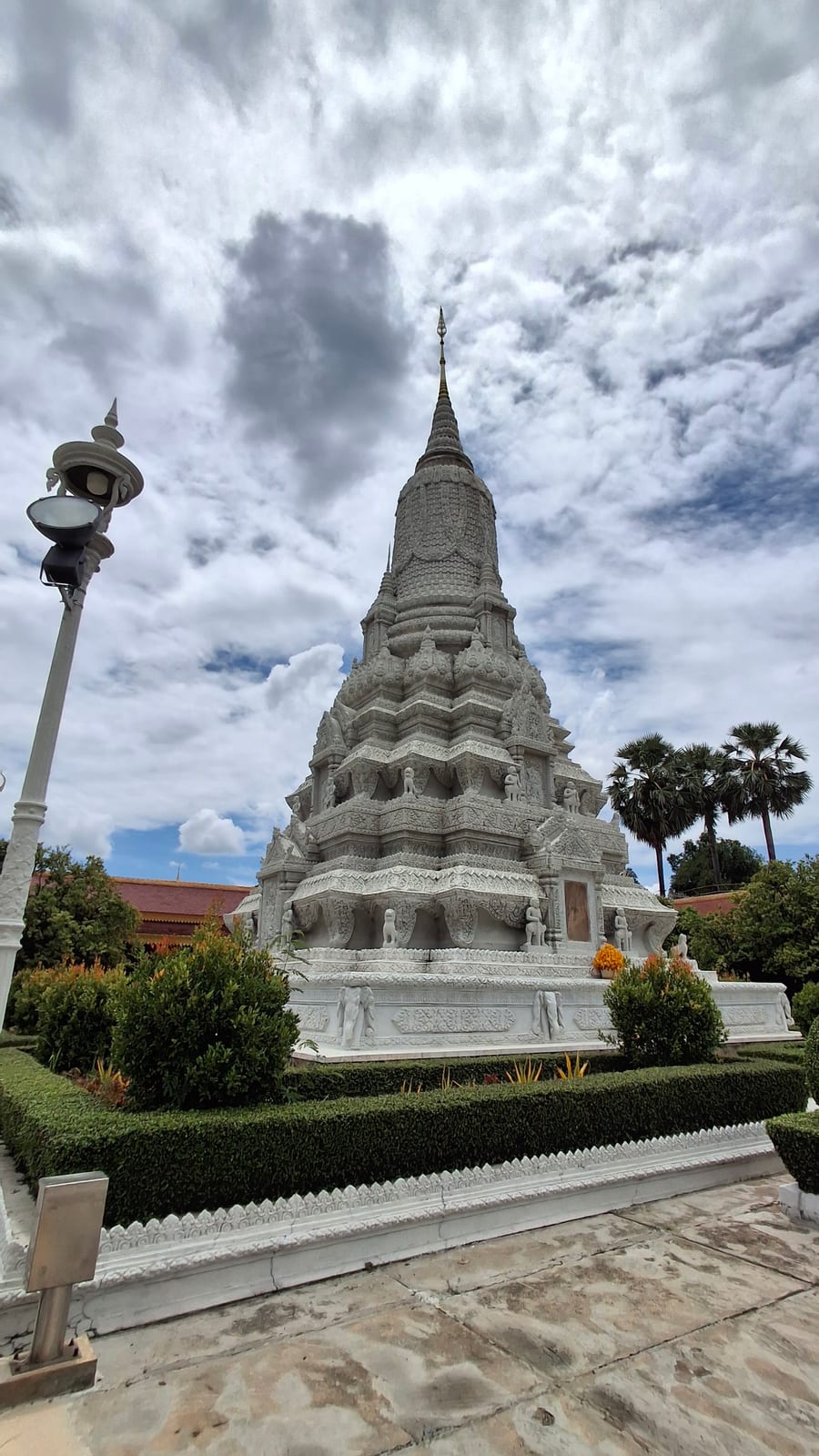
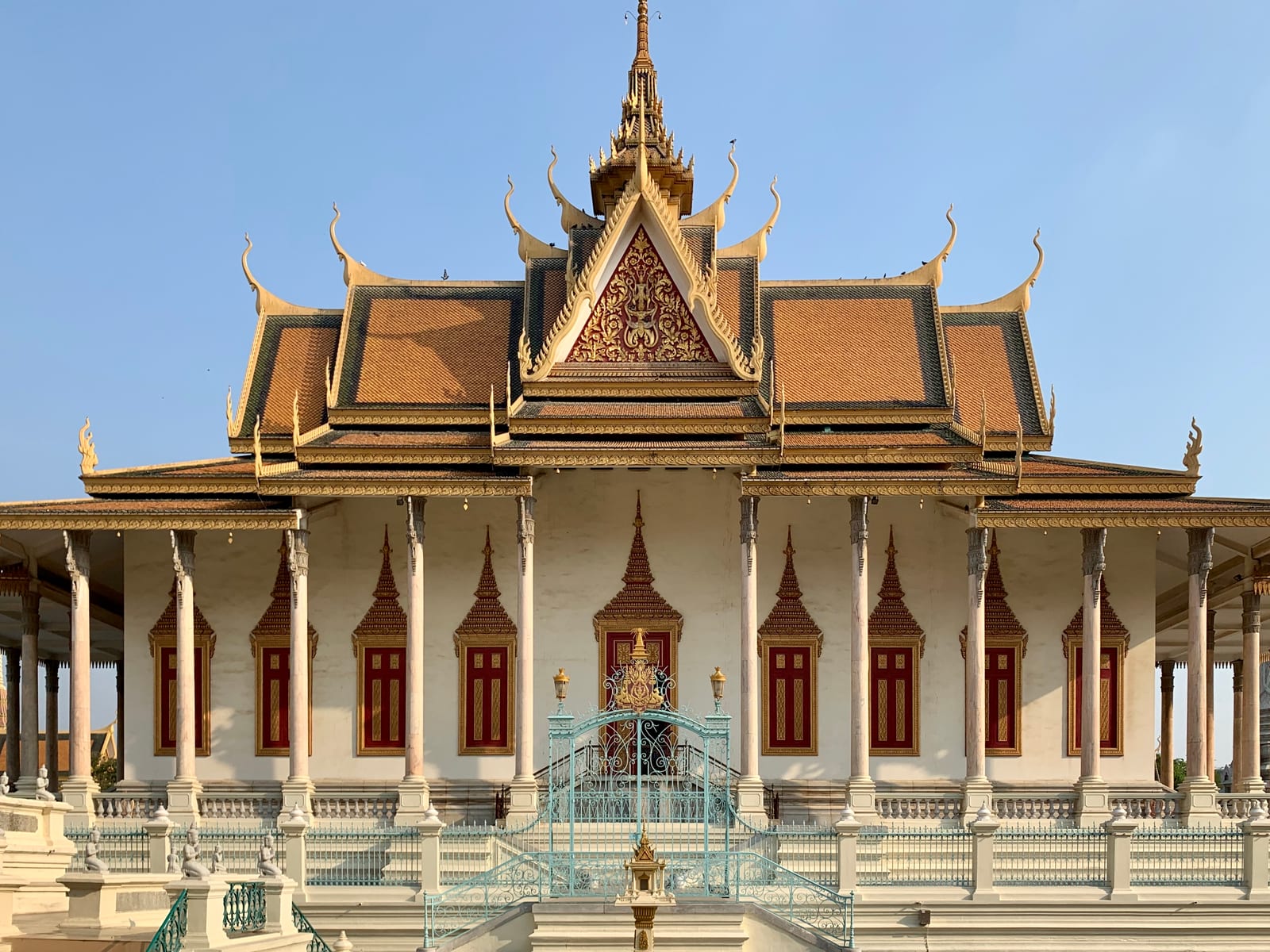
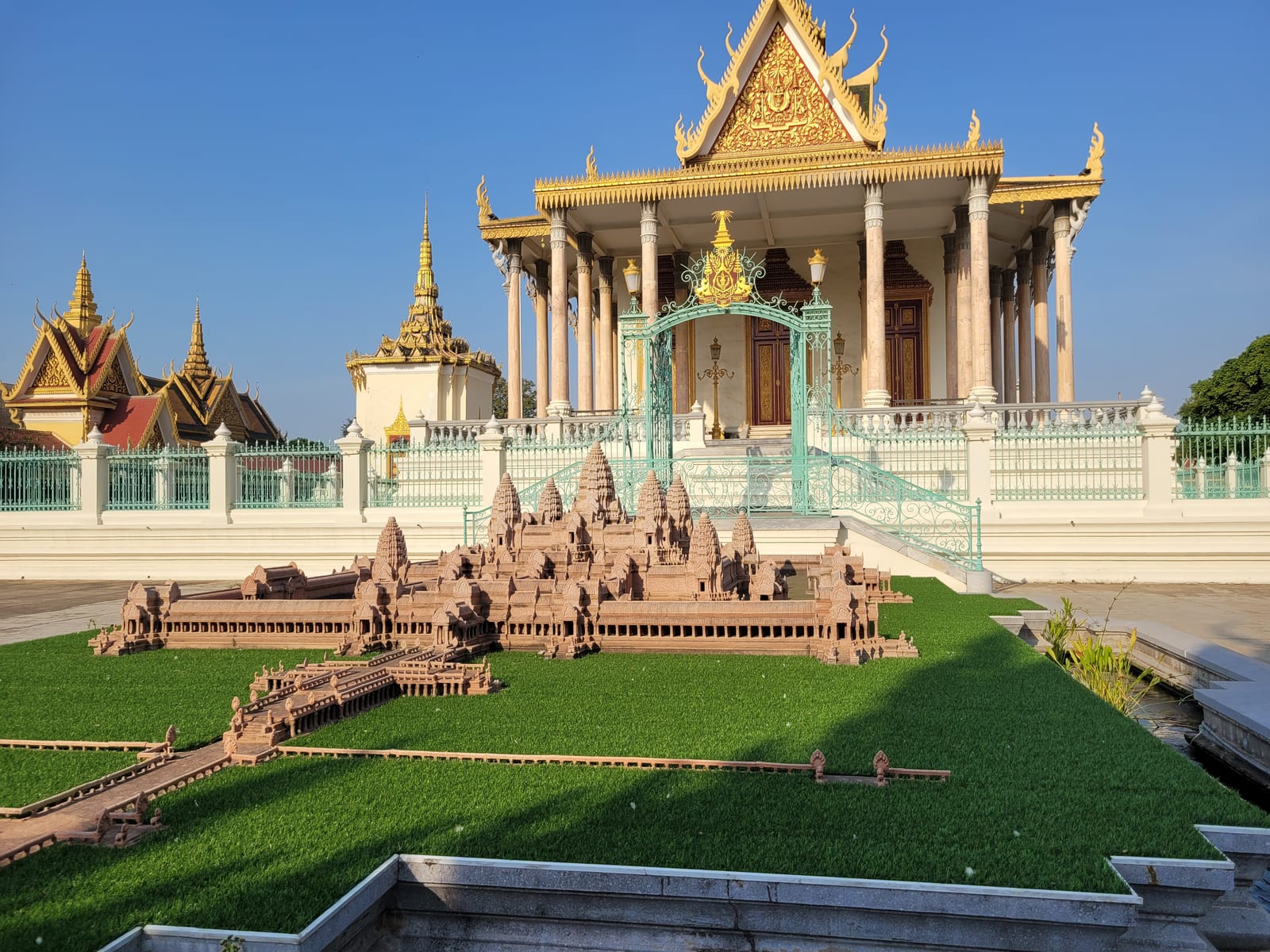
Silver Pagoda (Wat Preah Keo Morakot)

Silver Pagoda (Wat Preah Keo Morakot)

វត្តព្រះកែវមរកត

The floor is laid with 5,329 solid silver tiles (about 1 kg each). Inside stands a life-size 90 kg solid-gold Buddha encrusted with 9,586 diamonds — the largest a 25-carat stone at the crown — and a 17th-century crystal (Emerald) Buddha said to bring peace and harvest.

✨ 5,329 silver tiles · 9,586 diamonds

The Reamker Cloister

The Reamker Cloister

ចម្លាក់រាមកេរ្តិ៍

A 600-metre gallery of murals (painted 1903–1904) narrating the Reamker, Cambodia's version of the Ramayana — battles of gods and demons, apsara dancers and the loyal monkey-god Hanuman.

✨ 600 m of murals

Chanchhaya Pavilion (Moonlight Pavilion)

Chanchhaya Pavilion (Moonlight Pavilion)

ព្រះរាជបន្ទំចន្ទឆាយា

An elegant open-air pavilion facing the avenue, historically the royal grandstand for classical Apsara dance performances and ceremonial parades.

✨ Royal dance stage

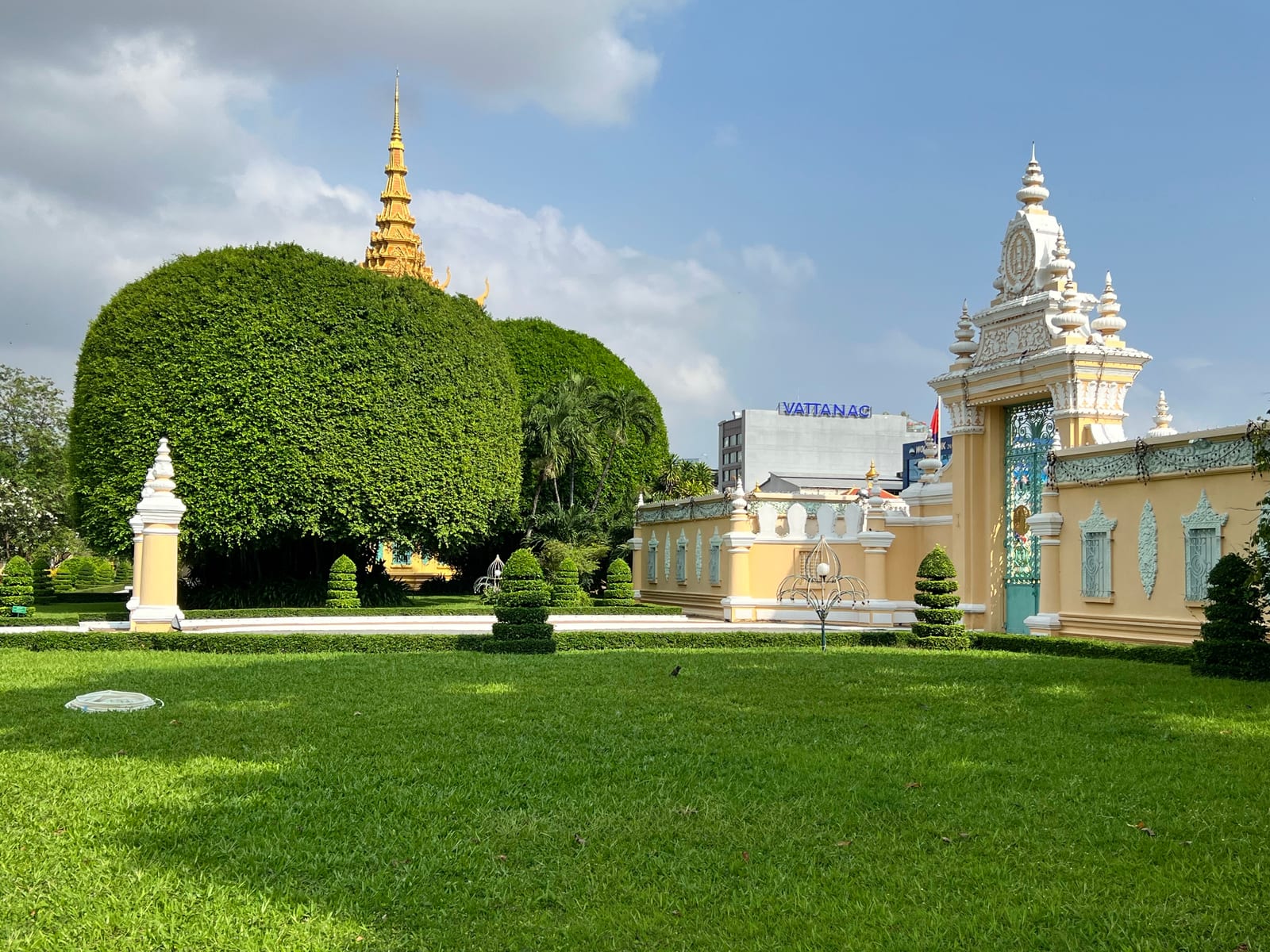
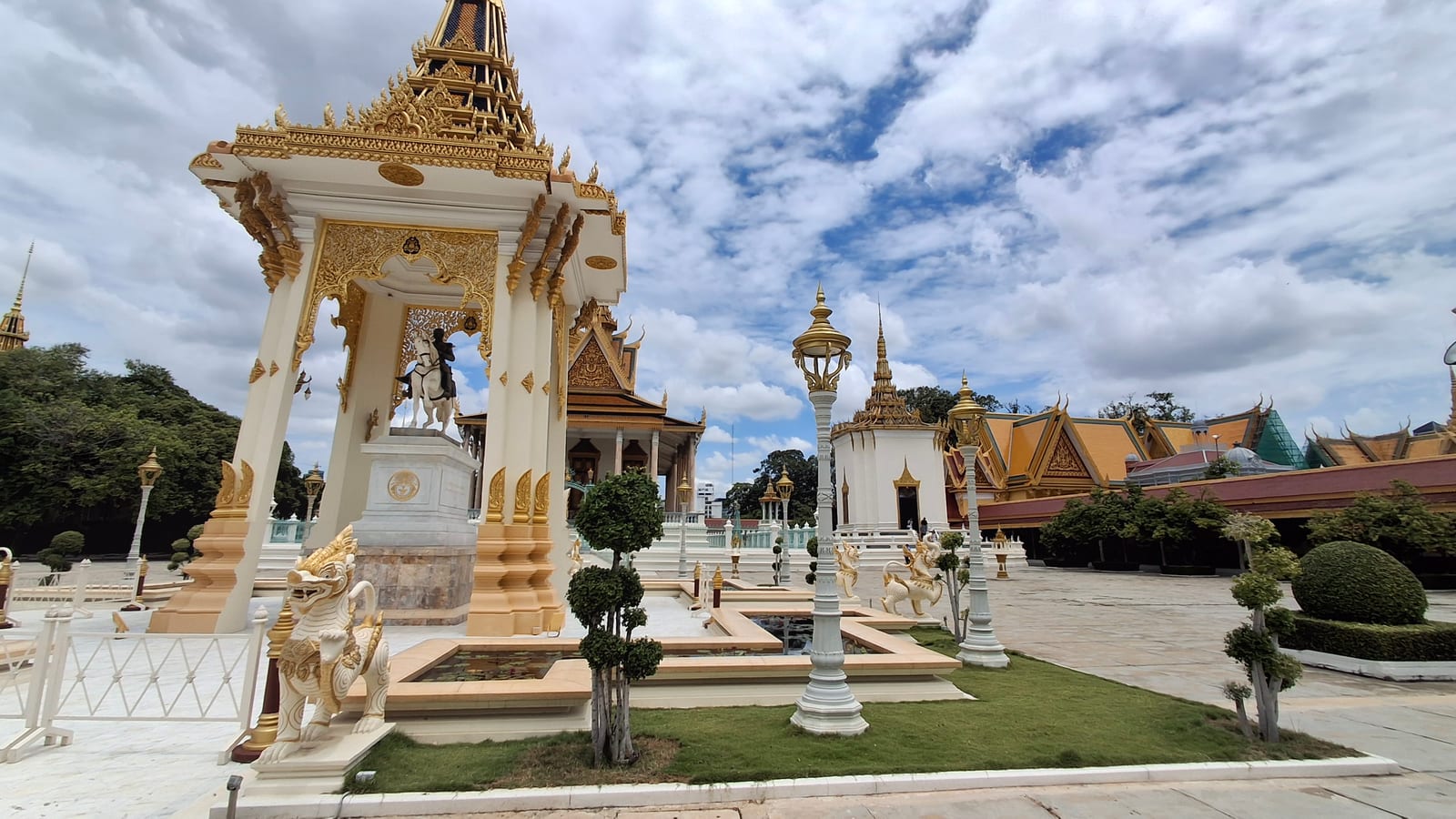
Royal Gardens & Napoleon III Pavilion

Royal Gardens & Napoleon III Pavilion

ឧទ្យានព្រះរាជវាំង

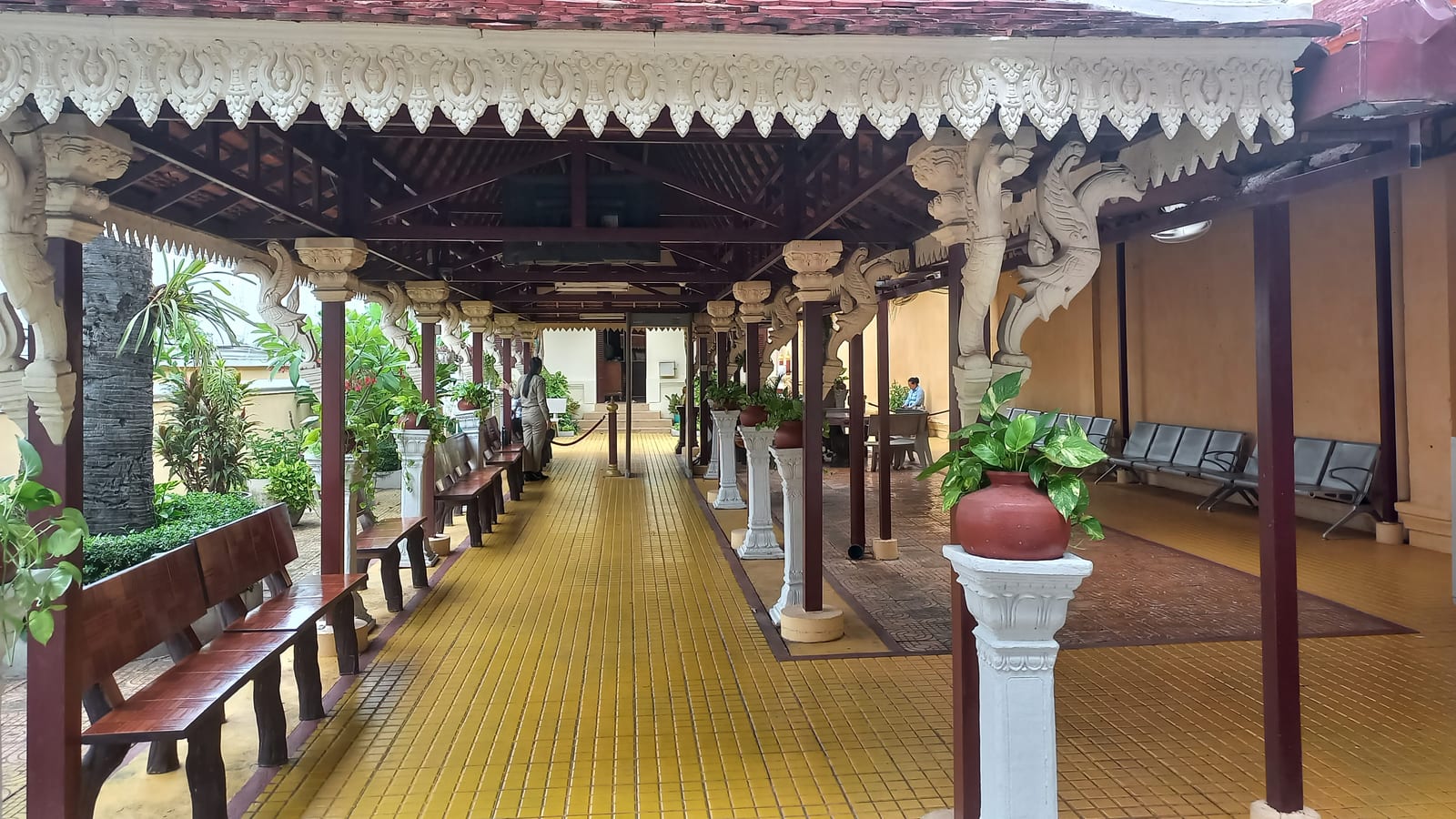
Shady lawns, topiary and a small iron pavilion gifted by France — a calm place to rest between sights.

✨ French gift

Plan your trip

Plan your visit

🕗

Opening hours

08:00–11:00 and 14:00–17:00. Closed for lunch (11:00–14:00). May close temporarily for royal ceremonies or state events.

Opening hours and closure rules checked October 2026. Verify on the day, as royal ceremonies can close sections at short notice.

⏱️

Suggested visit

1.5–2 hours

Go early (08:00) or after 14:30 to beat the heat and the crowds.

💡

Good to know

  • Hire an official guide at the entrance ($10–$15) for royal stories and hidden details.
  • Carry USD cash — tickets are sold on-site only.
  • No photography inside the Throne Hall or the Silver Pagoda.
  • Watch the royal flag: if it flies, the King is in residence.

Recommended route (1.5–2 h)

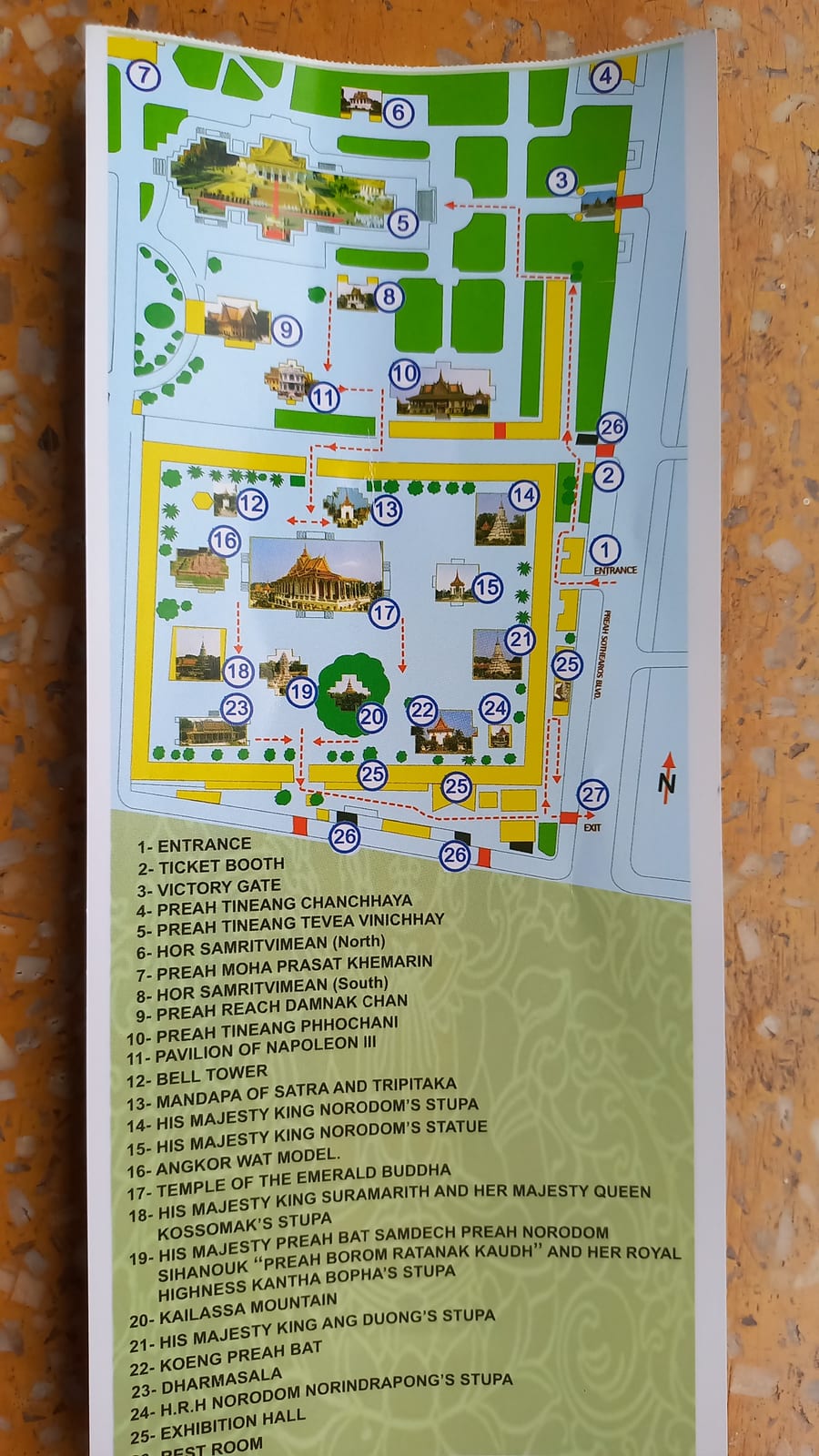
  1. Enter at the main gate and pause at the ticket booth.
  2. Stroll the Royal Gardens toward the Throne Hall (view the exterior and staircase).
  3. Visit the Silver Pagoda and the 600 m Reamker cloister.
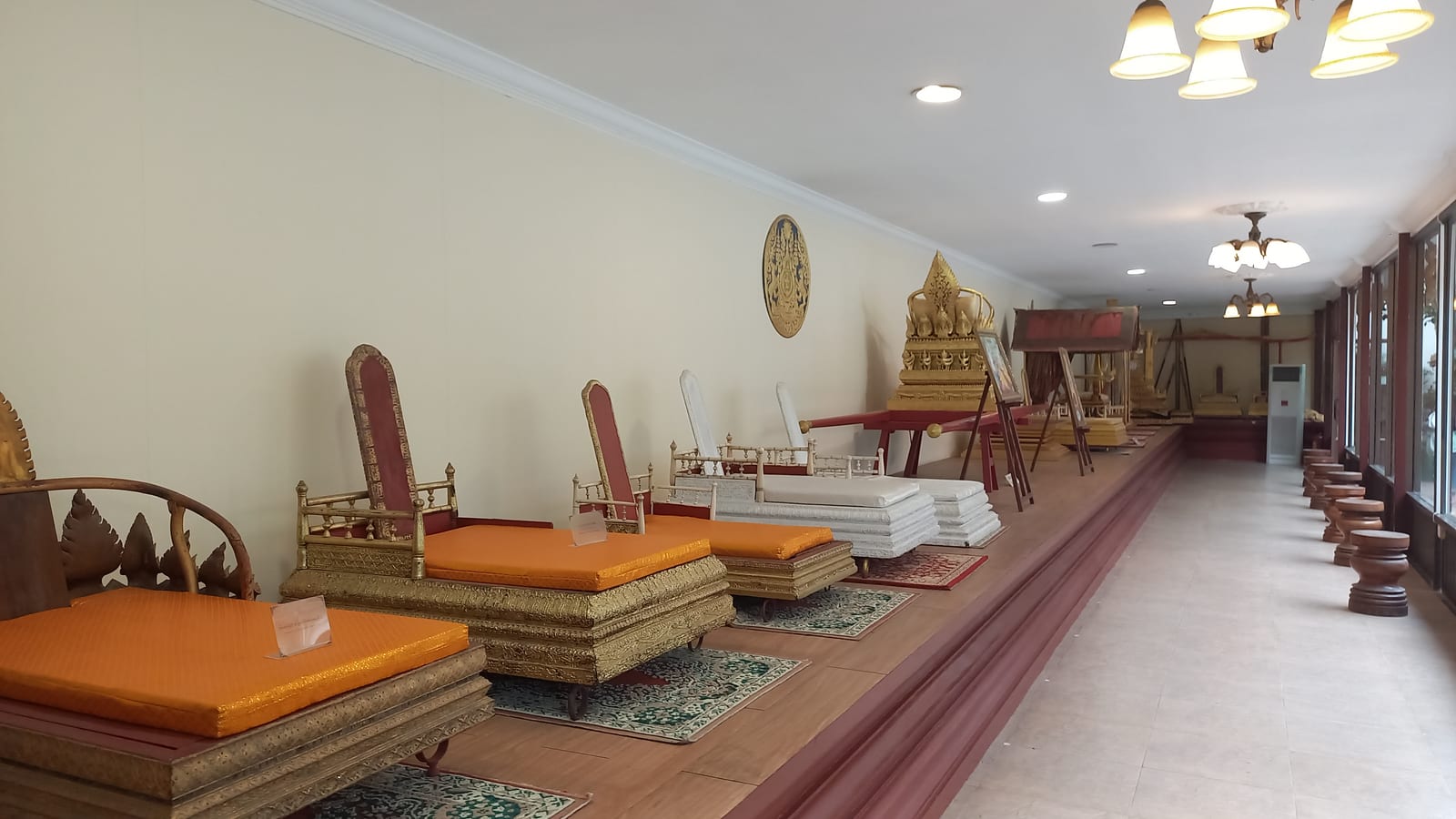
  4. See the royal regalia, carriages and costume exhibition.
  5. Exit near the National Museum.

Tickets

Admission

$10 USD (cash, paid on-site)

Notes

Includes the palace grounds, Throne Hall exterior and the Silver Pagoda. Photos are NOT allowed inside the Throne Hall or the Silver Pagoda. Bring your passport; the dress code is enforced.

Ticket price and entry rules checked October 2026. Confirm at the gate before visiting, as prices and conditions can change.

Etiquette

Dress code (strictly enforced)

The palace is an active royal and religious site. Visitors in sleeveless tops, shorts or skirts above the knee are regularly turned away — even a scarf over the shoulders may not be accepted.

❌

Not allowed

Sleeveless tops, shorts, short skirts, ripped jeans, crop tops, see-through fabrics.

✔️

Required

Shoulders and knees fully covered — a T-shirt with sleeves and long trousers or a long skirt.

👟

Comfort

Modest, breathable clothing and comfortable shoes; you will walk outdoors in the heat.

Weather & What to Pack

Current conditions at the Royal Palace of Cambodia and a seven-day outlook for Phnom Penh, refreshed automatically.

Live weather is temporarily unavailable

The live forecast could not be loaded at this moment. Phnom Penh is hot all year: expect 25–35 °C, high humidity and a possible afternoon shower. Carry water, sun protection and a light rain layer.

Recommended Routes (Half Day / Full Day)

Two ready-made itineraries built around the palace's 08:00–11:00 and 14:00–17:00 opening windows and the midday closure.

Half day · 3 hours

08:00 – 11:00

Morning window

  1. 08:00

    Buy your ticket at the main gate and enter as the grounds open.

  2. 08:15

    Cross the courtyards to the Throne Hall and its coronation hall.

  3. 09:00

    Silver Pagoda: the emerald Buddha, the silver-tiled floor and the regalia display.

  4. 09:45

    Mural galleries — the long Reamker cycle along the inner wall.

  5. 10:15

    Ceremonial objects and the French-colonial facades of the inner court.

  6. 10:45

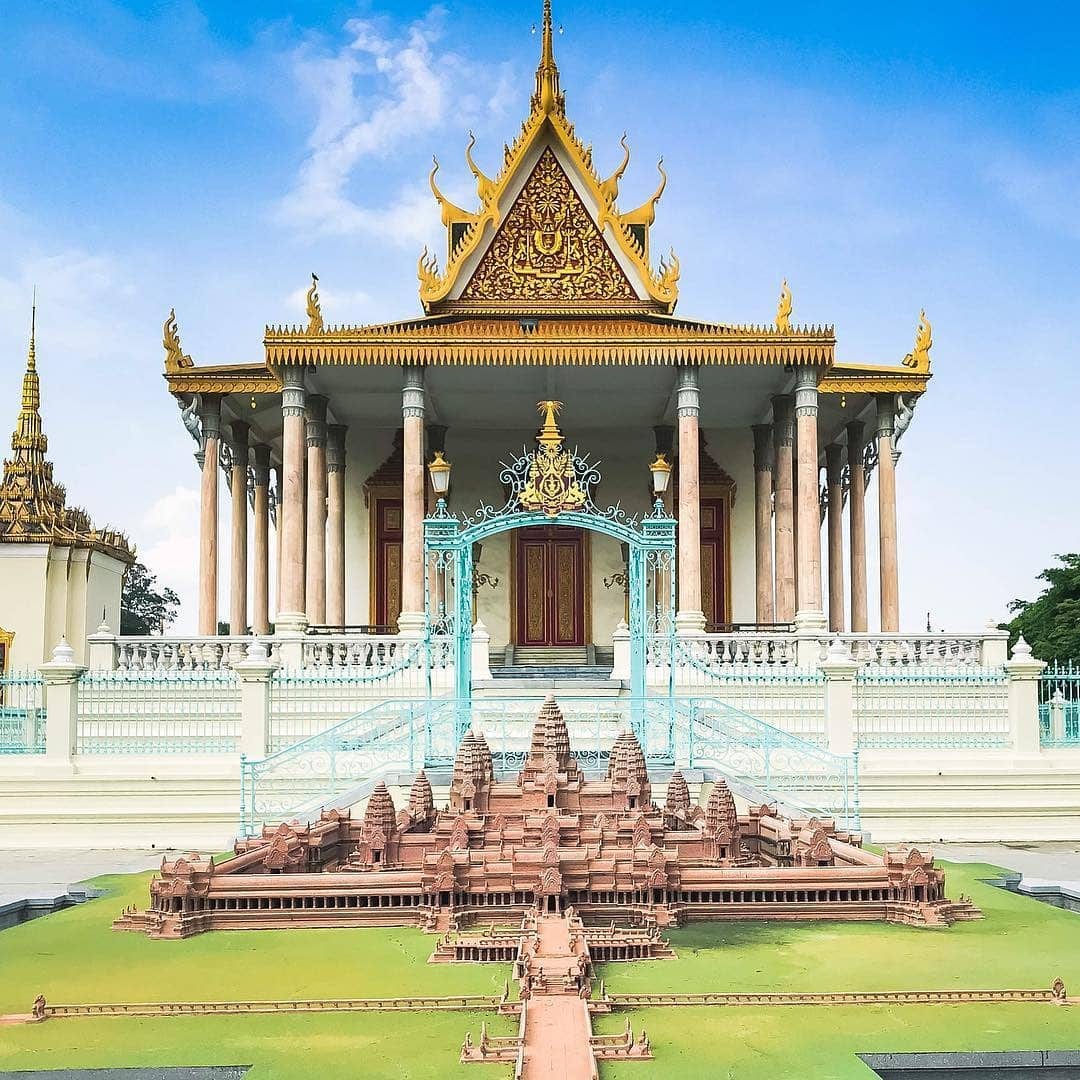
    Final pass through the gardens and the Angkor Wat model.

  7. 11:00

    Exit at the midday closure and walk five minutes to the riverside for an early lunch.

The whole morning covers roughly 1.5 km of gentle walking within a compact footprint, with shade and benches throughout.

Full day · 6–7 hours

08:00 – 17:00

Palace plus riverside quarter

  1. 08:00

    Palace grounds, Throne Hall and Silver Pagoda in the morning window.

  2. 11:00

    Exit at the closure and walk five minutes to the National Museum of Cambodia.

  3. 12:30

    Lunch in the riverside quarter and rest through the hottest hours.

  4. 14:00

    Return for the afternoon window, or visit Wat Phnom for the city's founding legend.

  5. 15:30

    Stroll Sisowath Quay and the riverside promenade.

  6. 16:45

    Sunset over the four-faced confluence, then the night market for dinner.

The 11:00–14:00 closure is not dead time — the National Museum next door and the riverside restaurants fill it comfortably.

Visit Plans by Traveller Type

Three tailored routes — families with children, photographers and nature lovers, and low-mobility visitors who need the flattest paths. Choose by travelling party and the pace you want.

Families with children

About 2 hours

  1. 1 Start in the shaded courtyards so children can settle before the heat builds.
  2. 2 At the Throne Hall, tell the story of the coronation ceremonies that still take place here.
  3. 3 Turn the Silver Pagoda into a treasure hunt: count the silver floor tiles and find the emerald Buddha.
  4. 4 In the mural galleries, retell the Reamker as a monkey-army adventure.
  5. 5 Finish in the greener riverside space outside the gate to cool down.

💡 Leave before the 11:00 closure and use the entrance-area restrooms first. Strollers cope better with the flat entry paths than with the interior stone steps.

Photographers & nature lovers

About 2.5–3 hours

  1. 1 Be at the gate for the 08:00 opening to shoot the courtyards before the crowds arrive.
  2. 2 Use the morning side light along the Throne Hall facade.
  3. 3 Work the Silver Pagoda steps and gilded spires against the sky.
  4. 4 Move to the cloister for mural details and the play of light and shadow.
  5. 5 Return after 15:00 for warm light on the spires and the riverside promenade.

💡 Photography is restricted indoors: no flash, and tripods and drones generally need permission. Midday hours give the flattest, least rewarding light.

Low-mobility & step-free visitors

About 1.5 hours including rest stops

  1. 1 Ask at the entrance which route has the fewest steps on the day of your visit.
  2. 2 Follow the main axis and its flatter paving to view the Throne Hall exterior.
  3. 3 View the Silver Pagoda from the terrace in front rather than climbing its steps.
  4. 4 Use the shaded seating for a hydration break before continuing.
  5. 5 Finish before the hottest hours and before the 11:00 closure.

💡 Gravel and stone paving make wheelchairs and walking frames difficult in places — bring a companion, water and sun protection, and allow generous time.

Getting there

The palace sits on Samdach Sothearos Blvd, facing the Tonlé Sap river in central Phnom Penh.

By air

Phnom Penh International Airport is about 30 min by taxi to the palace.

By tuk-tuk / taxi

The easiest way across town; ask for 'Royal Palace' (preah ba-rom rea-chh veang).

On foot

Walkable from the Riverside, the National Museum and Wat Phnom in 10–20 min.

Step-by-step directions

1

From the airport

Take an official taxi from the Techo International Airport (KTI) rank. The ride is about 20 km and 40–50 minutes — allow extra time in traffic. Show the driver 'Royal Palace, Samdach Sothearos Blvd'.

2

From downtown / Riverside

Hail a tuk-tuk or passapp (ride-hailing app); the fare is usually $2–4 USD. Ask for 'Preah Barom Reachea Vaeng'.

3

By tuk-tuk to the gate

Ask to be dropped at the main entrance on Samdach Sothearos Blvd, facing the river — the ticket booth is just inside.

4

On foot

If you are along Sisowath Quay, walk north ~3 min; the palace walls and golden spires are unmistakable.

Visitor Services & Nearby Facilities

A category-by-category overview of the practical facilities around the Royal Palace of Cambodia — which types of service exist within walking or short-drive distance, and how they usually work.

Toilets & drinking water

Public restrooms are available near the entrance area and beside the Silver Pagoda. Tap water in Phnom Penh is not drinking water; bottled water is sold by small shops around the entrance and along the riverside.

Use the restrooms before you enter the interior courtyards — facilities inside the grounds are limited.

Parking

There is no large dedicated car park. Cars generally use paid or marked street parking along Samdach Sothearos Blvd and the surrounding blocks, and tour coaches stop at designated curbside points. Motorcycle parking is easier to find close by.

Ride-hailing apps and tuk-tuks avoid the parking question altogether, especially at peak hours.

Food & drink

There is no full-service restaurant inside the grounds. Within a five to fifteen minute walk you will find a wide range of local restaurants, cafés, bakeries and street-food stalls, concentrated in the riverside quarter.

Budget stalls, mid-range dining rooms and upscale places sit side by side — compare a couple before committing.

Accommodation

The immediate palace district is a low-rise historic quarter with no accommodation inside the grounds. Hostels, boutique guesthouses and international hotels cluster in the riverside and central districts, mostly a short ride away.

Staying riverside keeps the palace, the National Museum and the night market within walking distance.

Shops & convenience stores

Convenience stores and small supermarkets within walking distance cover water, sun protection and basic supplies. Larger shopping centres sit a short drive away in the central commercial district.

Small shops still prefer cash — keep low-denomination US dollar notes and some riel for change.

Fuel & EV charging

Petrol stations sit mainly on the city's arterial roads rather than in the historic centre. Public electric-vehicle charging is still developing in Phnom Penh, with a limited number of points in service.

Drivers and EV users should plan a refuelling or charging stop outside the palace district and allow extra time.

Money & connectivity

ATMs and currency-exchange counters operate around the entrance area and the riverside, handling both US dollars and Cambodian riel. Local prepaid SIM cards and eSIM plans are available in the city centre.

Admission is paid in cash in US dollars — carry small notes, as card readers are not always available.

Health & pharmacies

Pharmacies operate in the surrounding blocks; 24-hour pharmacies and international clinics require a short drive into the central districts. There is no on-site medical facility for visitors.

Bring rehydration salts, insect repellent and any regular medication — heat and dehydration are the most common travel complaints here.

Access, luggage & guides

Much of the grounds is stone and gravel paving with flights of steps at the Silver Pagoda, so wheelchairs and strollers meet uneven surfaces. Licensed multi-language guides offer their services near the entrance, and left-luggage arrangements are usually informal.

Travel light, and ask staff at the entrance which route has the fewest steps on the day of your visit.

This guide is non-commercial and does not name or recommend individual businesses. Establishments and opening conditions change frequently, so treat the notes below as general categories and confirm details on site.

Location & How to Visit the Royal Palace of Cambodia in Phnom Penh

Samdach Sothearos Blvd (3), Phnom Penh, Cambodia

Address
Samdach Sothearos Blvd (3), Phnom Penh, Cambodia
Google plus code
HW7J+HG
Coordinates
11.5639375, 104.9313125
Opening hours
08:00 – 11:00 & 14:00 – 17:00

For official updates and regional tourism information, visit the Cambodia / Phnom Penh official tourism portal. Cambodia Official Tourism Portal · Phnom Penh City Hall

View all reviews on Google Maps

Landmarks & Attractions Around the Royal Palace Phnom Penh

When visiting the Royal Palace of Cambodia, visitors can easily explore surrounding historical landmarks and points of interest, including the National Museum of Cambodia and the Riverside (Sisowath Quay). Make a day of the riverside quarter.

National Museum of Cambodia
2 min walk
Riverside (Sisowath Quay)
3 min walk
Wat Phnom
10 min drive
Central Market (Phsar Thmei)
10 min drive

Taste the place

Food nearby

Refuel along the river after your visit.

🍜

Khmer traditional

Try amok, lok lak and beef salad at riverside restaurants.

  • Fish amok
  • Lok lak
  • Nom banh chok
🍜

Riverside cafés

Shaded spots for iced coffee, fresh coconut and people-watching.

  • Iced coffee
  • Fresh coconut
🍜

Night market

Evening stalls for grilled skewers, noodles and tropical fruit.

  • Grilled skewers
  • Fruit shake

What visitors say

4.3

Rating: 4.3 / 5 · 13,827 reviews

Synced from Google Maps user reviews, synced October 2026; copyright belongs to the original authors and Google Maps.

Visitors love

  • ✓The shimmering Silver Pagoda
  • ✓The 59 m golden spire
  • ✓The peaceful royal gardens
  • ✓Apsara dance history

Before you go

  • !Cover shoulders & knees
  • !Bring USD cash
  • !Avoid midday (11:00–14:00 closed)
  • !Hire a guide for the stories
🗺️ View all reviews on Google Maps

Google Maps — Royal Palace of Cambodia ratings & reviews

For photographers

Photography tips

The grounds are a dream for photographers — just respect the no-flash, no-interior rules.

Best light

  • Morning (08:00–10:00)

    Soft light and fewer crowds; cool before the heat.

  • Late afternoon (15:00–17:00)

    Warm gold light on the spires; long shadows in the gardens.

Great spots

  • 📸Throne Hall facade
  • 📸Silver Pagoda steps
  • 📸Royal Gardens topiary
  • 📸Riverside gate

Best time to visit

Phnom Penh is hot year-round; plan around the heat and the rains.

Nov – Feb (cool & dry)

Most comfortable; peak season, arrive early.

Mar – May (hot)

Very hot; visit at opening or late afternoon.

Jun – Oct (wet)

Afternoon showers; mornings are clear and green.

Any day

Avoid the 11:00–14:00 midday closure.

Seasonal Visiting Strategy

Climate, crowds and light conditions season by season, so you can choose the right month, the right hour and the right clothing.

Cool dry season

November – February

Typical temperature
21–31 °C, humidity at its lowest
Rainfall
Very little — roughly 5–25 mm a month
Crowds
Peak season, busiest from December to January
Light & photography
Clear skies and soft side light in the early morning; long shadows after 15:00
What to wear
Long trousers or a long skirt with a shoulder-covering top — the dress code applies all year
Strategy
The most comfortable window. Arrive at the 08:00 opening, clear the courtyards before the coach groups, and use the 11:00–14:00 closure for a riverside lunch.

Hot season

March – May

Typical temperature
26–36 °C, hottest in April with a higher apparent temperature
Rainfall
Occasional short showers as the monsoon builds
Crowds
Moderate, but exceptionally busy around Khmer New Year in mid-April
Light & photography
Harsh overhead light at midday; best contrast before 10:00 and after 15:30
What to wear
Light, loose, pale clothing with a hat, sunglasses and sunscreen
Strategy
Split the day around the heat: courtyards from 08:00 to 10:00, shade and fluids through midday, then return in the late afternoon.

Rainy season

June – October

Typical temperature
25–33 °C with high humidity
Rainfall
150–250 mm a month, mostly short afternoon downpours
Crowds
The quietest months, with September and October the lowest of all
Light & photography
Dramatic cloudscapes after rain and strong reflections on wet stone
What to wear
Quick-drying clothing with a compact umbrella or light rain shell
Strategy
Use the dry mornings for the courtyards, keep a waterproof bag for electronics, and stay out of open areas during thunderstorms.

Shoulder weeks

Late October & early November

Typical temperature
24–32 °C, humidity easing
Rainfall
Rain tapering off with occasional showers
Crowds
Rising as the dry season approaches
Light & photography
Mixed cloud and sun; good diffused light for the murals
What to wear
Light removable layers
Strategy
A good compromise: noticeably fewer visitors than peak season, with the grounds green from the rains.

Climate figures follow the 1991–2020 thirty-year normals published by NOAA's National Centers for Environmental Information together with Cambodia's Ministry of Water Resources and Meteorology. Crowd and light notes describe typical seasonal patterns rather than guarantees.

Understanding the Palace & Visitor Responsibility

The Royal Palace of Cambodia is a working royal and religious complex rather than a museum set. Knowing what you are looking at — and how to behave around it — makes the visit far richer.

🧭 Reading the architecture

Naga, garuda and the Khmer cosmos

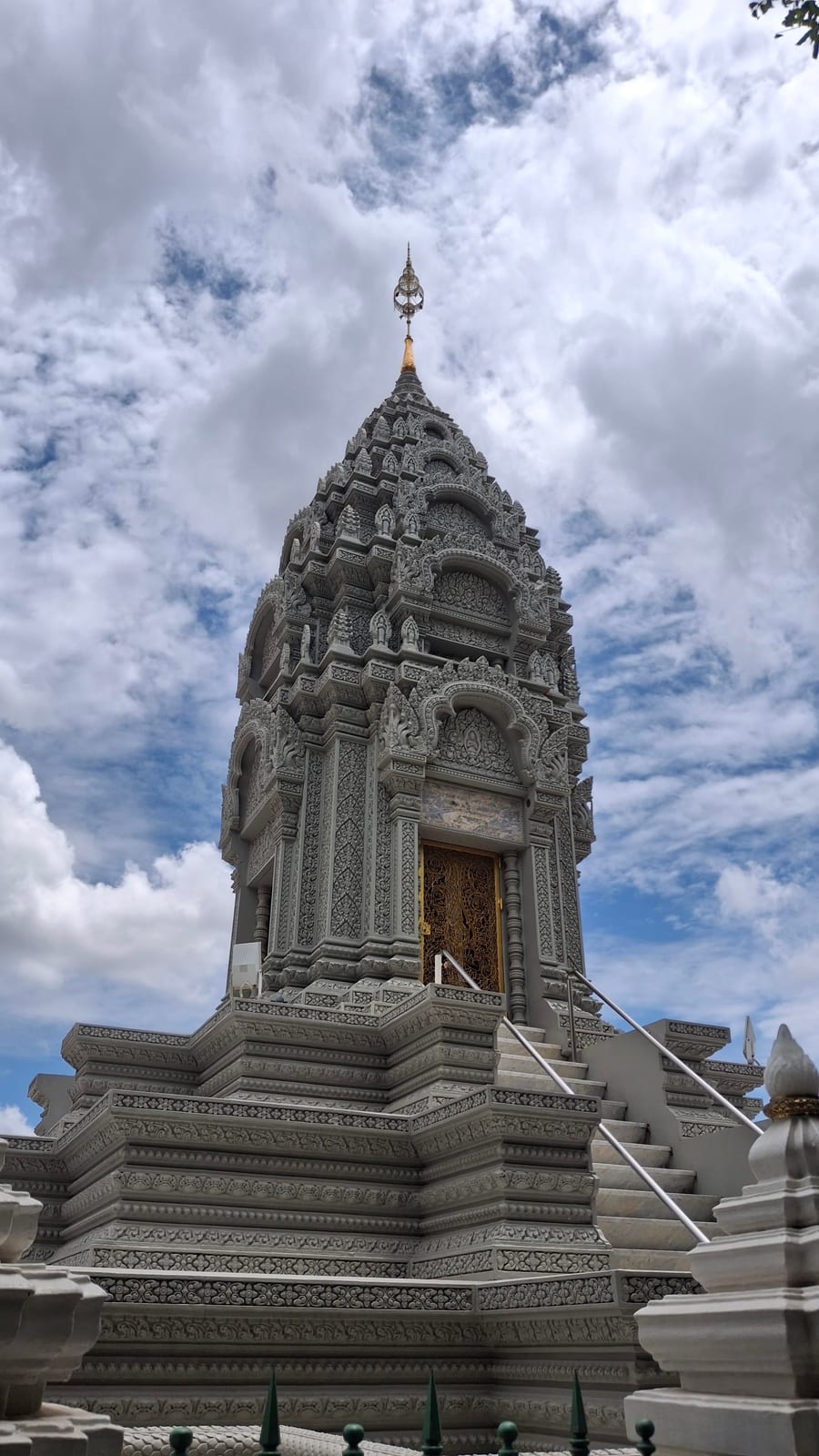
Roof ridges and stairways carry naga serpent balustrades and garuda bird-man figures. In Khmer cosmology the naga guards water and earth while the garuda guards the sky, so together they frame each building as a model of the universe.

The Throne Hall and the coronation tradition

The tiered roof and gilded spire of the Throne Hall represent Mount Meru, the centre of the cosmos. Coronations, royal audiences and state ceremonies have been held here across successive reigns, and the hall is still in ceremonial use.

The Silver Pagoda

Its floor is paved with more than five thousand silver tiles, and its collection includes the emerald Buddha and a gold Buddha studded with thousands of diamonds. It works as the temple of the palace, cared for by monks, rather than as an exhibition hall.

The painted Reamker cycle

The cloister wall carries a continuous painted narrative of the Reamker, the Khmer Ramayana. The paintings are meant to be read in sequence, which is why the surface is protected from touch and from flash photography.

A residence still in use

Parts of the complex remain the royal residence. When religious or state ceremonies take place, sections close to visitors at short notice — read a closure as a sign of a living institution rather than a poorly run attraction.

📜 Legends & symbolism

The widow Penh and the hill of the four faces

The founding legend tells of a wealthy widow named Penh who found four Buddha images in the river and raised a hill to enshrine them. The hill became Wat Phnom, and the city took its name from it: Phnom Penh, the hill of Penh.

Why the palace stands at this bend

The palace overlooks the Chatomuk, the four-faced confluence where the Tonlé Sap meets the Mekong and the Bassac. Traditional Khmer geomancy reads the meeting of waters as a place of power and protection, which is why the capital was moved here from Oudong in 1866.

The emerald Buddha

The temple of the palace takes its name from its emerald-coloured Buddha image. Comparable emerald figures across Southeast Asia are treated as palladia — protective images on which the wellbeing of a kingdom is said to rest.

The naga as water guardian

The nagas on the stairways and the many-headed serpent hoods above the doorways recall the Khmer myth of the naga princess and the origin of the royal line, a reminder that the palace stands for sacred as well as political continuity.

🤝 Visitor responsibility

The palace is an active religious and royal site and it belongs to the people who live with it. A few habits keep it open and undamaged for the next visitor.

  • ✓ Dress respectfully — shoulders and knees covered — and remove shoes and hats before entering temple buildings.
  • ✓ Keep your voice low, and never lean on, climb or turn your back on Buddha images, naga figures or other sculpture.
  • ✓ Do not touch mural paintings, gilded surfaces or textiles: skin oils and abrasion are the fastest forms of damage.
  • ✓ Flash photography and indoor video are generally not allowed, and drones or professional equipment usually require permission.
  • ✓ Ask before photographing people, monks or worshippers, and step aside during prayers.
  • ✓ Women should avoid touching monks or handing objects to them directly; place items on a surface or pass them via a companion.
  • ✓ Take everything you bring away with you — waste collection inside the grounds is limited.
  • ✓ If a section is closed for a ceremony, accept it quietly: closures protect living traditions rather than inconvenience tourists.

About this guide

This is an independent, non-commercial educational resource: no ticket commissions, no affiliate links and no advertising. Information is cross-checked against public and official sources, and every figure quoted on this page is listed in the sources section below.

Frequently asked questions

How much is the ticket and where do I buy it?

About $10 USD, paid in cash on-site at the entrance. Cards are generally not accepted, so bring US-dollar bills.

Should I hire a guide?

Strongly recommended. Official multilingual guides (including Chinese) at the entrance cost about $10–$15 and unlock royal history and hidden details.

What is the dress code?

Shoulders and knees must be fully covered. Sleeveless tops, shorts and short skirts are not allowed, and a scarf over the shoulders may be refused.

What are the opening hours?

08:00–11:00 and 14:00–17:00, with a midday closure from 11:00 to 14:00. The palace may also close for royal ceremonies.

Can I take photos inside?

You may photograph the gardens and exteriors, but photography and video are strictly forbidden inside the Throne Hall and the Silver Pagoda.

How long should I plan for?

About 1.5–2 hours for the highlights: Throne Hall exterior, Silver Pagoda, the Reamker cloister and the royal regalia exhibition.

Where is the Royal Palace of Cambodia located?

The Royal Palace of Cambodia is located on Samdach Sothearos Blvd (3) in Phnom Penh, Cambodia (Google plus code HW7J+HG), on the west bank of the Tonlé Sap river next to the National Museum of Cambodia.

Is the Royal Palace of Cambodia free to visit?

No. General admission is about $10 USD per person and is paid in cash at the entrance; there is no free general admission.

Sources & references

This is an independent visitor guide. Attraction details are cross-checked against the public and official sources below; ratings and review counts are synced from Google Maps.

Reviews · synced October 2026 View all reviews on Google Maps ↗

For official updates and regional tourism information, visit the Cambodia / Phnom Penh official tourism portal. Cambodia Official Tourism Portal

Image rights Image rights: all images displayed on this website remain the property of their original photographers and are protected by copyright.